机器人日报
机器人论文日报 — 2026-11-13
🤖 Scanned 35 papers from the last 3 days of arXiv announcements (cs.RO / eess.SY / cs.LG), picked 5 for modular & legged robotics — summarized by DeepSeek.
🤖 从近 3 天的 arXiv 新论文(cs.RO / eess.SY / cs.LG)中扫描 35 篇,围绕模块化与足式机器人精选 5 篇 — 由 DeepSeek 生成双语摘要。
1. Softness is something you also need! Why compliance helps control: information metrics of a passive walker with compliant ankle
柔性也是必需的!为何柔顺性有助于控制:带柔顺踝的被动行走器的信息度量
Authors / 作者: Fabio Bonsignorio, Elisabetta Barletta, Sorin Dragomir, Francesco Esposito, Enrica Zereik
arXiv: 2611.13779 · PDF
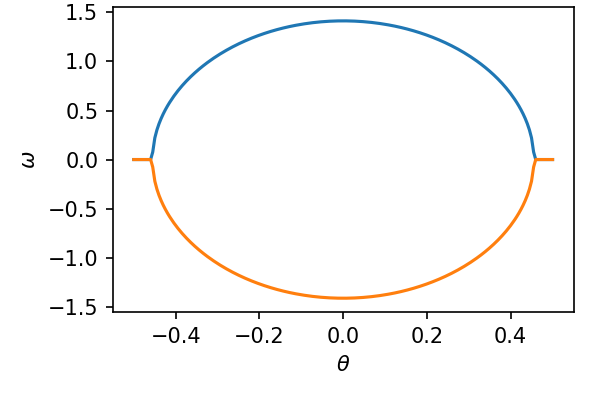
The paper revisits information-theoretic metrics linking phase-space volume and dynamics, and applies them to a passive walker with a compliant ankle to show how compliance affects controllability and robustness. It provides a technical note on phase-space calculations for inverted-pendulum and passive walker models, arguing for morphological computation and embodied intelligence in compliant legged systems.
中文摘要: 本文回顾了将相空间体积与动力学关联的信息度量方法,并将其应用于带柔顺踝的被动行走器,分析柔顺性如何影响可控性和鲁棒性。作者给出了倒立摆和被动行走器模型的相空间计算技术笔记,主张在柔顺腿式系统中采用形态计算和具身智能的设计范式。
💬 A conceptual paper that connects information metrics to compliant legged locomotion, offering a theoretical lens for designing passive-dynamic modular legs.
💬 一篇将信息度量与柔顺腿式运动联系起来的理论性论文,为设计被动动态模块化腿提供了理论视角。
Why read it / 推荐理由: It provides a principled argument for exploiting compliance in legged robots, which is directly relevant to modular leg design and control. 它为在腿式机器人中利用柔顺性提供了有原则的论据,与模块化腿的设计和控制直接相关。
2. PneuGen: Task-Driven Agentic Co-Design of Soft Pneumatic Robots
PneuGen:软体气动机器人的任务驱动智能体协同设计
Authors / 作者: Shaohong Zhong, Marco Pontin, Perla Maiolino
arXiv: 2611.13344 · PDF
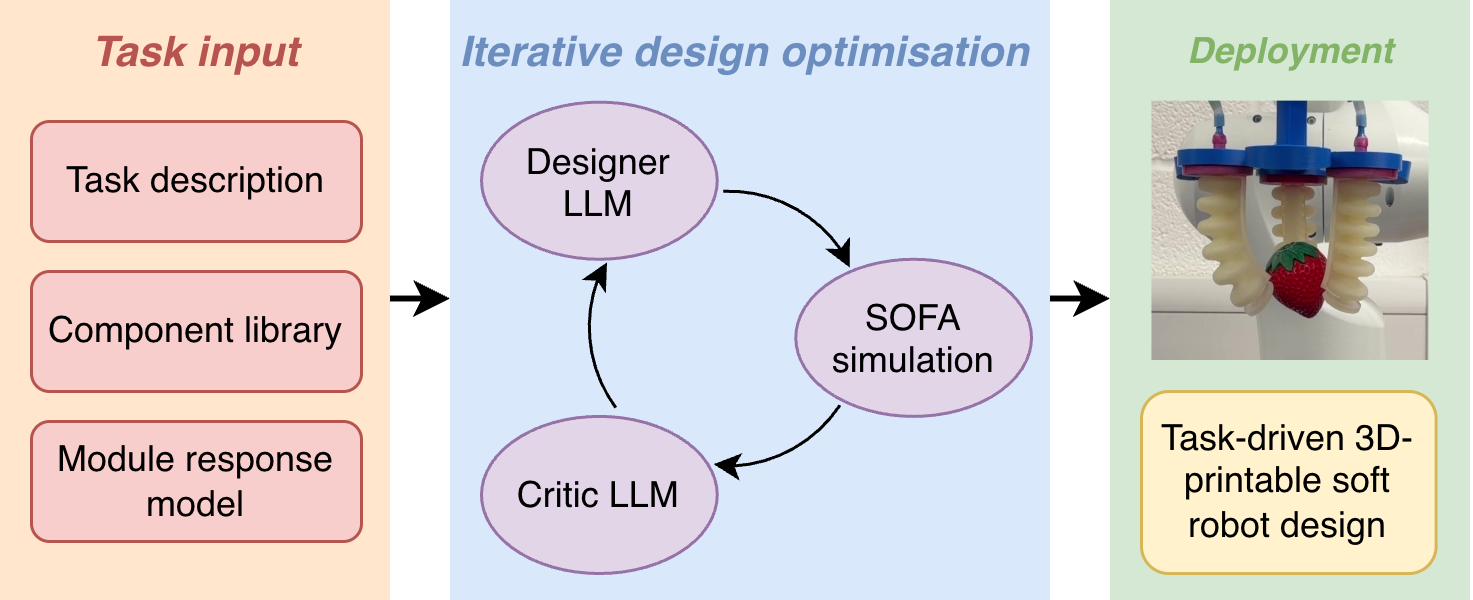
PneuGen uses LLM-based designer and critic agents to search over soft pneumatic robot designs, leveraging fitted module response models and finite-element simulation for iterative evaluation. It outperforms prior computational optimization baselines on grasping and shape-matching tasks, with ablations showing the benefit of the critic agent and module response model.
中文摘要: PneuGen利用基于大语言模型的设计者和评论者智能体来搜索软体气动机器人设计,借助拟合的模块响应模型和有限元仿真进行迭代评估。在抓取和形状匹配任务上,该方法优于先前的计算优化基线,消融实验表明评论者智能体和模块响应模型的有效性。
💬 An agentic co-design framework that uses LLMs to make soft robot design tractable, potentially extendable to modular leg design.
💬 一个智能体协同设计框架,利用大语言模型使软体机器人设计变得可行,有望扩展到模块化腿的设计中。
Why read it / 推荐理由: It demonstrates a novel LLM-driven optimization loop for complex robot design spaces, which could inspire modular legged robot co-design. 它展示了一种新颖的LLM驱动优化循环,用于复杂机器人设计空间,可启发模块化腿式机器人的协同设计。
3. AHEADance: Anticipatory Humanoid Dance from Streaming Audio
AHEADance:基于流式音频的预期性人形机器人舞蹈
Authors / 作者: Tianhu Peng, Yukun Wang, Lingfan Bao, Yiyang Jia, Chengxu Zhou
arXiv: 2611.13370 · PDF
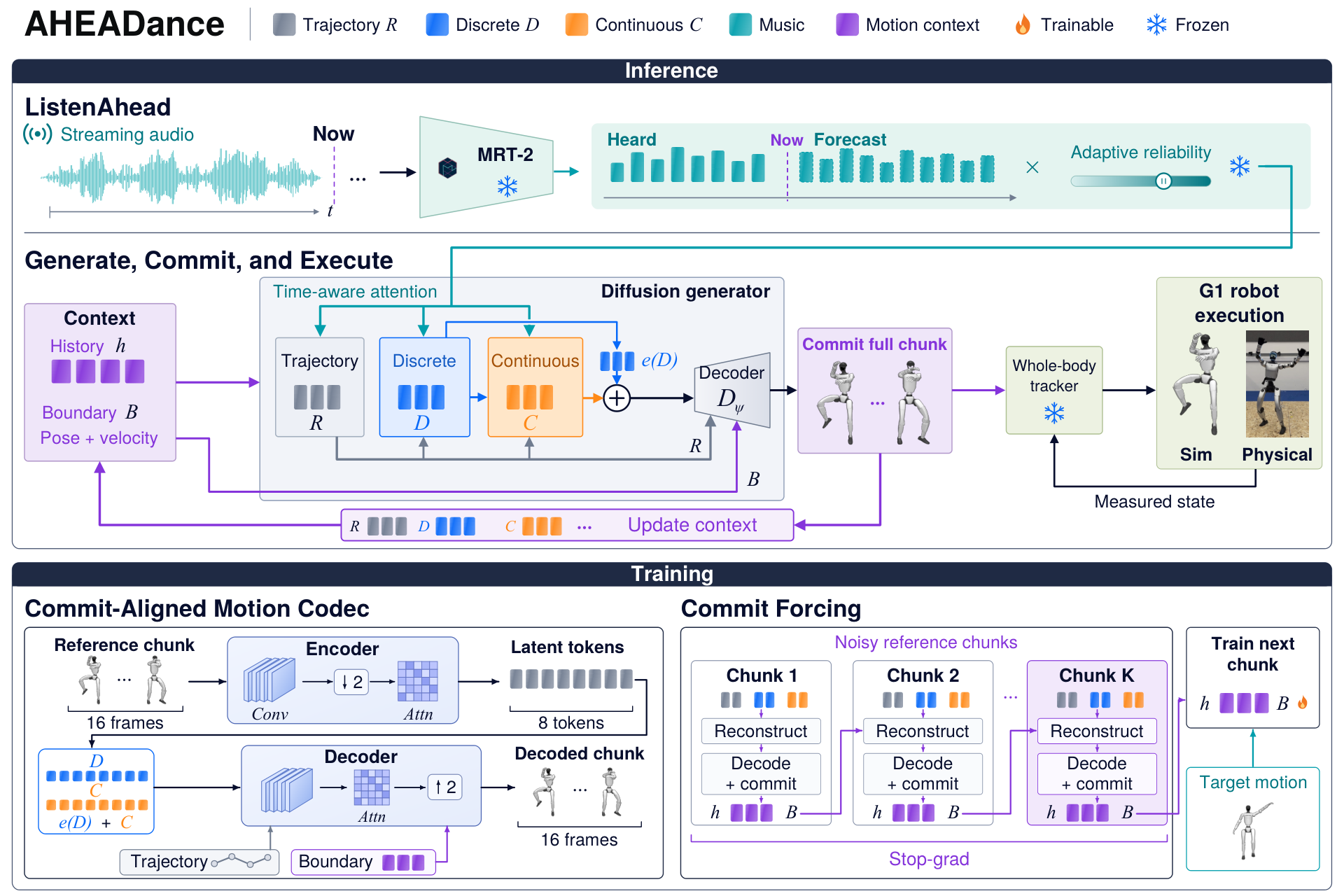
AHEADance generates dance motions for a humanoid robot from streaming audio by forecasting future music features and committing motion chunks, combined with a whole-body tracker. On a Unitree G1, it achieves better beat synchronization and reduces low activity from 83.5% to 10.3%, dancing without falling.
中文摘要: AHEADance通过预测未来音乐特征并提交运动块,结合全身跟踪器,从流式音频生成人形机器人的舞蹈动作。在Unitree G1上,它实现了更好的节拍同步,并将低活动比例从83.5%降低到10.3%,且跳舞时不摔倒。
💬 A whole-body control and motion generation pipeline on a real humanoid, showcasing streaming anticipation and robust tracking.
💬 一个在真实人形机器人上的全身控制和运动生成流程,展示了流式预期和鲁棒跟踪能力。
Why read it / 推荐理由: It provides a real-robot demonstration of whole-body tracking with anticipatory motion generation, relevant to dynamic legged locomotion control. 它提供了具有预期性运动生成的全身跟踪在真实机器人上的演示,与动态腿式运动控制相关。
4. DeRep: Learning Depth Representations for End-to-End Navigation in Cluttered Environments
DeRep:面向杂乱环境中端到端导航的深度表示学习
Authors / 作者: Hanyu Jin, Kenji Shimada
arXiv: 2611.13499 · PDF
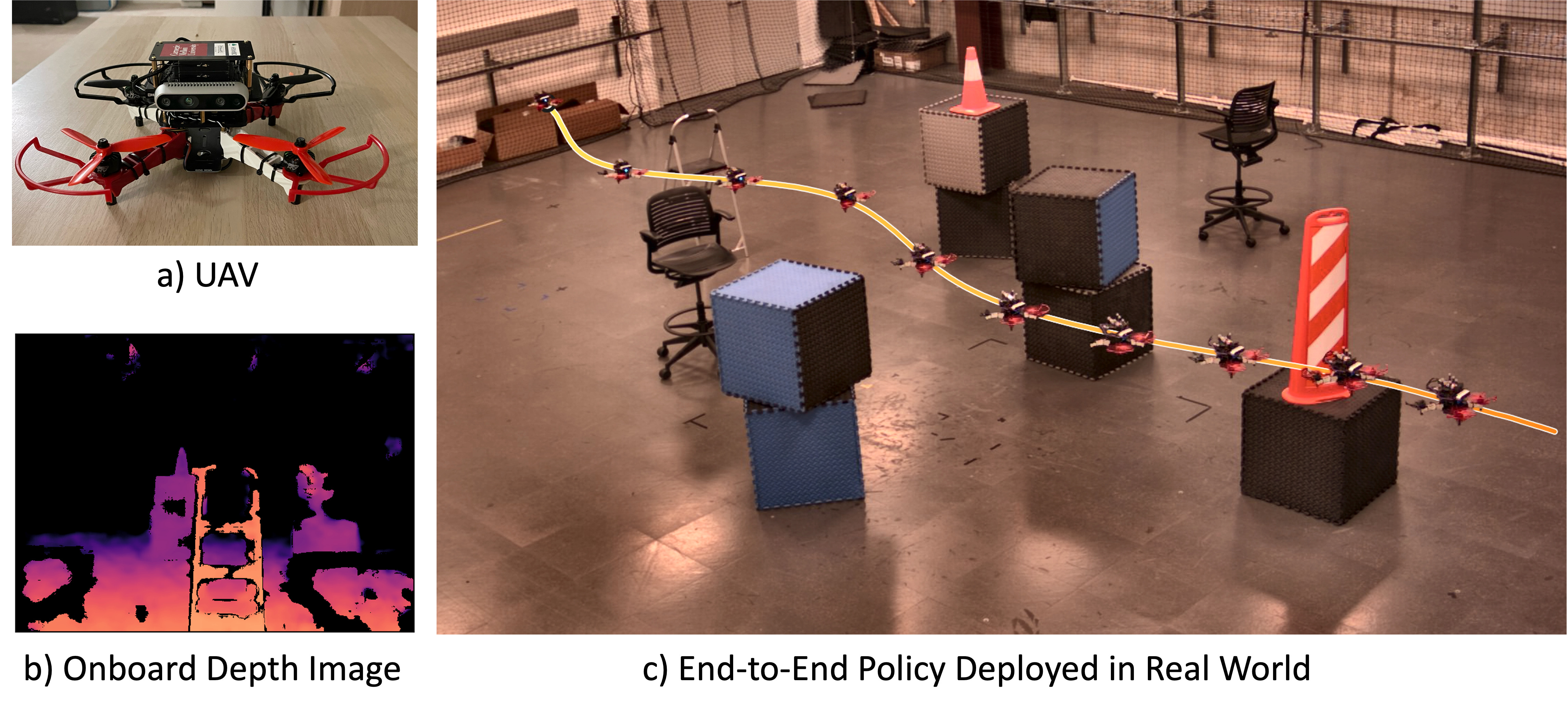
DeRep learns navigation-oriented depth representations by combining local bird’s-eye-view reachability supervision with depth reconstruction, pretraining frozen encoders evaluated with linear probing, imitation learning, and PPO. It achieves the lowest linear probe error and outperforms reconstruction-only baselines across six PPO conditions, improving navigation robustness.
中文摘要: DeRep通过结合局部鸟瞰图可达性监督和深度重建来学习面向导航的深度表示,预训练冻结编码器并在线性探测、模仿学习和PPO下评估。它实现了最低的线性探测误差,并在六个PPO条件下优于仅重建基线,提高了导航鲁棒性。
💬 A representation learning approach that uses reachability supervision to improve end-to-end navigation, relevant to traverse-capability-aware planning.
💬 一种利用可达性监督改进端到端导航的表示学习方法,与遍历能力感知的规划相关。
Why read it / 推荐理由: It offers a way to learn navigation representations that explicitly encode reachability, which is valuable for legged robots traversing cluttered terrain. 它提供了一种明确编码可达性的导航表示学习方法,对于在杂乱地形中穿行的腿式机器人有价值。
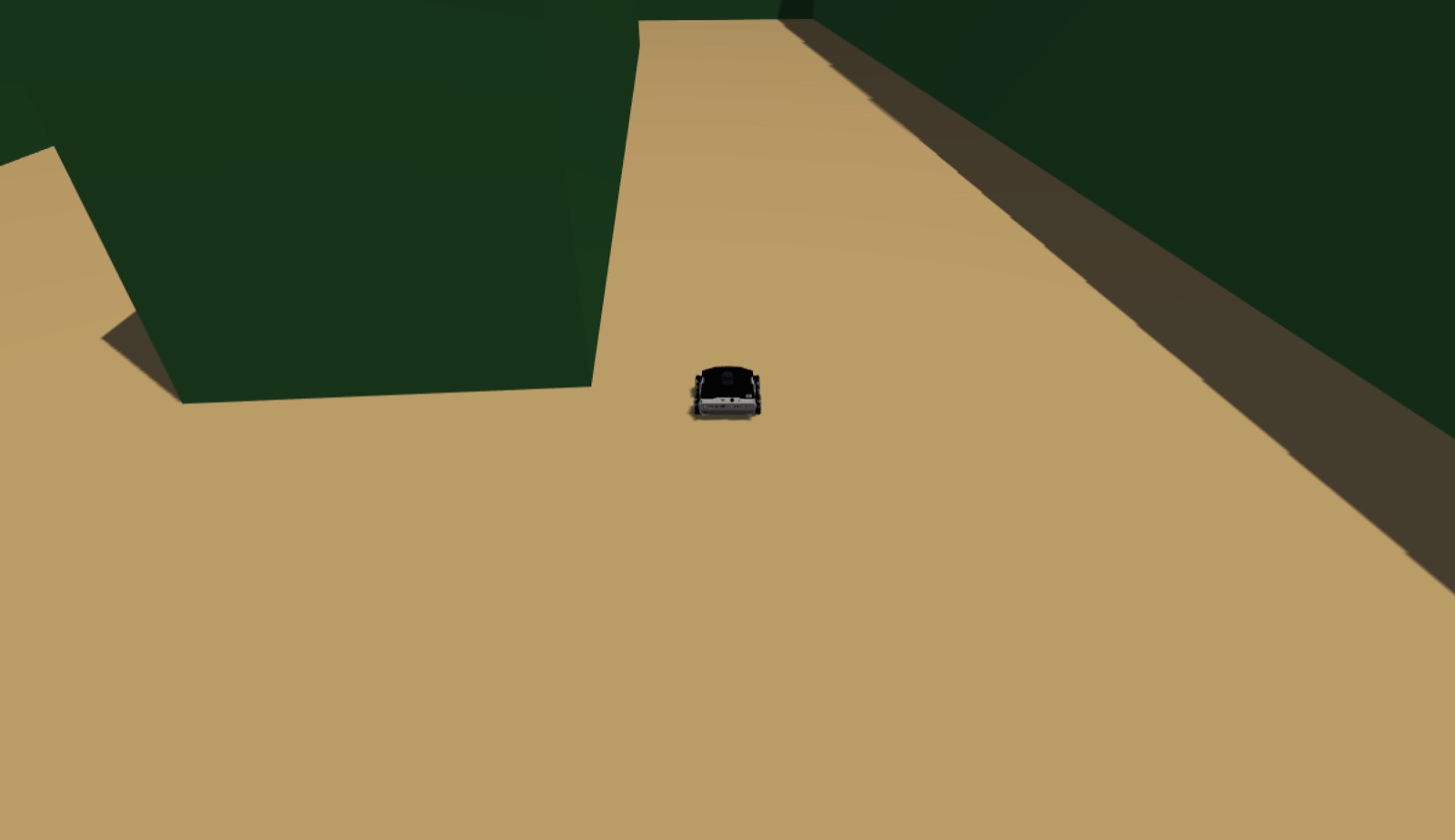
5. Maze Runner: Autonomous Maze Navigation with Line-Based Localization and Control Barrier Functions
Maze Runner:基于线特征定位和控制障碍函数的自主迷宫导航
Authors / 作者: Alvaro J. Gaona, Lucas Gómez-Velayos, Peter Pasuy-Quevedo
arXiv: 2611.12949 · PDF
Maze Runner is an open-source ROS 2 autonomy stack for maze navigation, using line-based EKF localization, A* or Hybrid A* planning, and NMPC with control barrier functions for safety. In simulation, it achieves 1.0 cm localization RMSE, plans in 6 ms, and solves NMPC in 11.7 ms on average, demonstrating a complete and reproducible navigation system.
中文摘要: Maze Runner是一个用于迷宫导航的开源ROS 2自主栈,采用基于线特征的EKF定位、A或Hybrid A规划,以及结合控制障碍函数的NMPC以确保安全。在仿真中,它实现了1.0厘米的定位RMSE,规划耗时6毫秒,NMPC平均求解时间11.7毫秒,展示了一个完整且可复现的导航系统。
💬 A well-engineered navigation stack that integrates localization, planning, and MPC with CBFs, though tested only in simulation.
💬 一个精心设计的导航栈,集成了定位、规划和带CBF的MPC,但仅在仿真中测试。
Why read it / 推荐理由: It provides a concrete example of MPC with CBFs for safe navigation in constrained environments, relevant to legged robot motion planning. 它提供了一个在受限环境中使用带CBF的MPC进行安全导航的具体示例,与腿式机器人运动规划相关。