机器人日报
机器人论文日报 — 2026-10-31
🤖 Scanned 110 papers from the last 7 days of arXiv announcements (cs.RO / eess.SY / cs.LG), picked 5 for modular & legged robotics — summarized by DeepSeek.
🤖 从近 7 天的 arXiv 新论文(cs.RO / eess.SY / cs.LG)中扫描 110 篇,围绕模块化与足式机器人精选 5 篇 — 由 DeepSeek 生成双语摘要。
1. The effect of limb kinematics on the speed of a legged robot on granular media
肢体运动学对腿式机器人在颗粒介质上速度的影响
Authors / 作者: Chen Li, Paul B. Umbanhowar, Haldun Komsuoglu, Daniel I. Goldman
arXiv: 1303.7276 · PDF
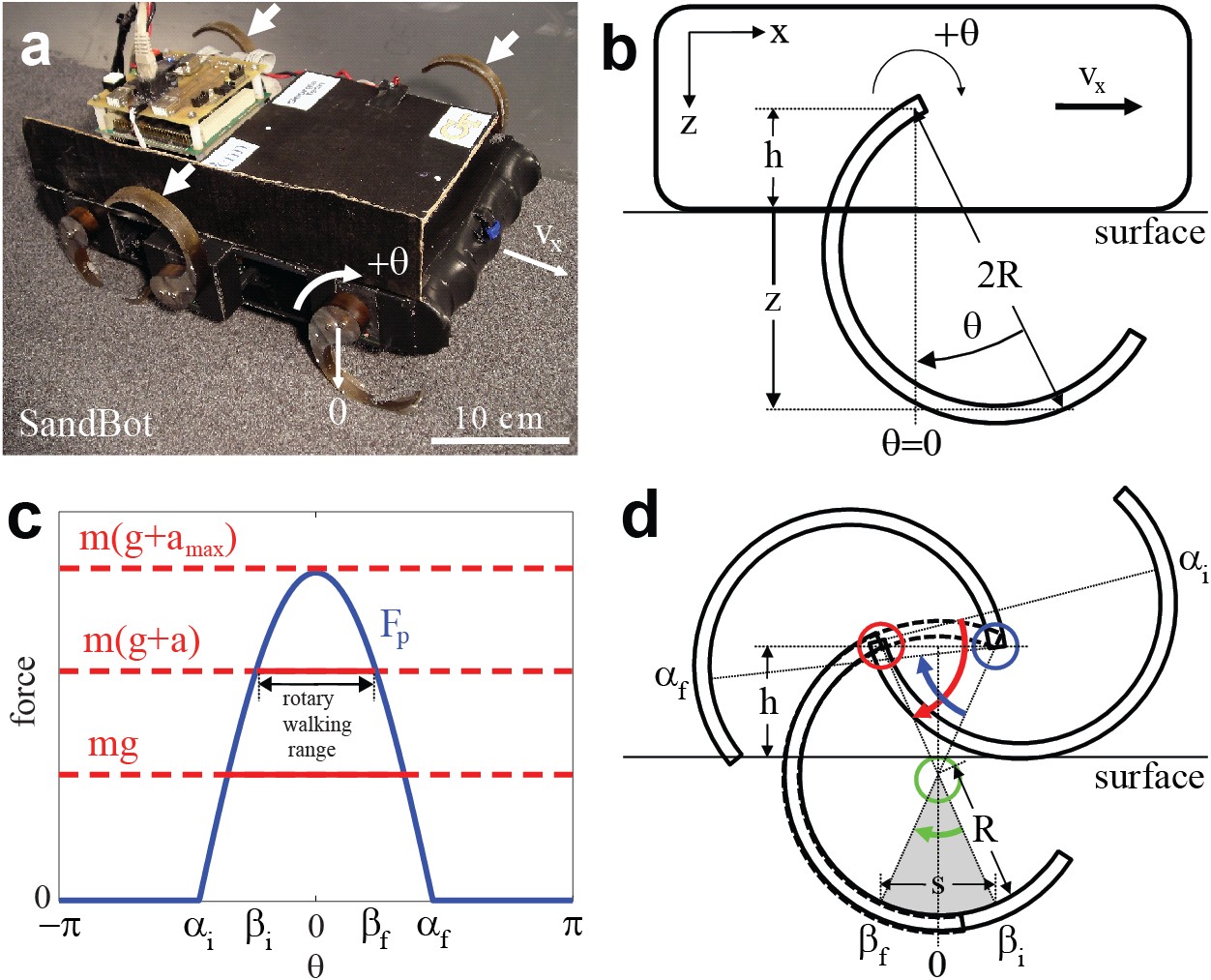
The authors systematically sweep gait parameters of the small hexapod SandBot over granular media and show that high speed occurs only in a narrow parameter region. Combining a kinematic model of the robot with a new anisotropic granular penetration force law predicts the resulting speed, with performance maximized when low-displacement gaits minimize body acceleration and limb interference.
中文摘要: 本文系统研究小型腿式机器人SandBot在颗粒介质上的运动性能随步态参数的变化,发现高速运动仅存在于很小的参数空间内。作者提出一个机器人运动学模型并结合新的各向异性颗粒穿透力模型,成功预测了机器人在沙地等松散介质上的速度。结果表明,当步态参数使机体加速度和肢体相互干涉最小化、并利用颗粒介质的固化特性时,性能达到最优。该工作为腿式机器人在复杂屈服地形上的步态设计与性能预测提供了物理基础。
💬 A classic, physically grounded study that links gait kinematics to substrate interaction, valuable for anyone designing legs for compliant or granular terrain.
💬 这是一项经典的、以物理机制为基础的研究,将步态运动学与地面介质交互联系起来,对设计适用于松软或颗粒地形的腿部结构具有参考价值。
Why read it / 推荐理由: It offers a quantitative model of leg-ground interaction that is directly useful for gait parameter selection and for designing reconfigurable leg modules on yielding terrain. 它提供了腿-地面相互作用的定量模型,可直接用于步态参数选择以及在松软地形上可重构腿模块的设计。
2. ThinkLocoManip: A Whole-Body Control Agentic Harness for Legged Loco-Manipulation
ThinkLocoManip:面向腿式移动操作的全身控制智能体框架
Authors / 作者: Nuo Chen, Shizeng Zhang, Yujie Yang, Jinghong Wang, Zhenyang Qu, Xiao-Ming Wu et al.
arXiv: 2610.34370 · PDF
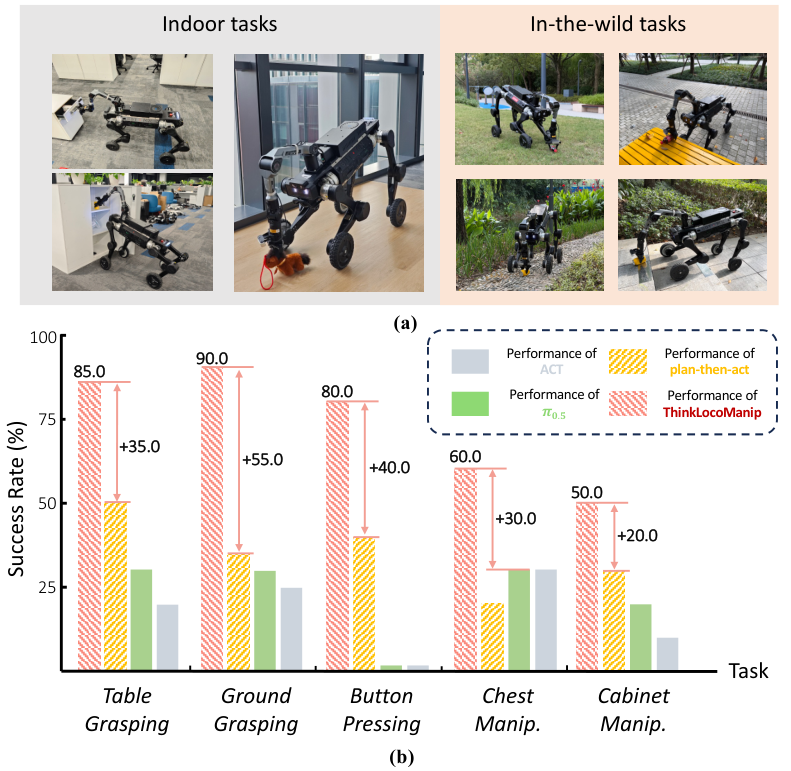
The paper proposes an interleaved reasoning-and-acting agentic harness that orchestrates specialized perception, navigation, manipulation and locomotion tools, explicitly treating locomotion as a first-class tool domain. A keyframe-thinking mechanism preserves critical execution context for error recovery over long horizons, and extensive real-world experiments validate the approach.
中文摘要: 本文提出ThinkLocoManip,一个面向腿式移动操作的智能体框架,用于在大规模环境中完成复杂长时程任务。与传统直接生成动作或先规划后执行的范式不同,该方法采用推理与行动交错的范式,使智能体在执行过程中持续推理、观察结果并调整策略。框架将感知、导航、操作与运动等专用工具统一编排,并首次把运动控制作为智能体推理与执行的一等工具域,同时设计关键帧思考机制以保留关键执行上下文、支持长时程任务中的错误恢复。大量真实机器人实验验证了其有效性。
💬 Its key contribution for the reader is treating locomotion as a modular tool that the whole-body agentic scheduler can compose, which is relevant to reconfigurable multi-skill leg platforms.
💬 对读者而言,其核心贡献在于把运动控制作为模块化工具交由全身智能调度器组合使用,这与可重构多技能腿式平台相关。
Why read it / 推荐理由: It provides a concrete architecture for composing whole-body control with high-level agentic reasoning, a useful blueprint for coordinating reconfigurable leg and manipulation modules. 它提供了将全身控制与高层智能体推理相结合的具体架构,对于协调可重构腿部与操作模块具有借鉴价值。
3. Zero-HLM: Generalizable Humanoid Loco-Manipulation without Real Robot Data
Zero-HLM:无需真实机器人数据的可泛化人形移动操作
Authors / 作者: Dianyi Yang, Mengya Liu, Zhumei Wang, Yu Liu, Xiaochen Zhang, Yixuan Li et al.
arXiv: 2610.35075 · PDF
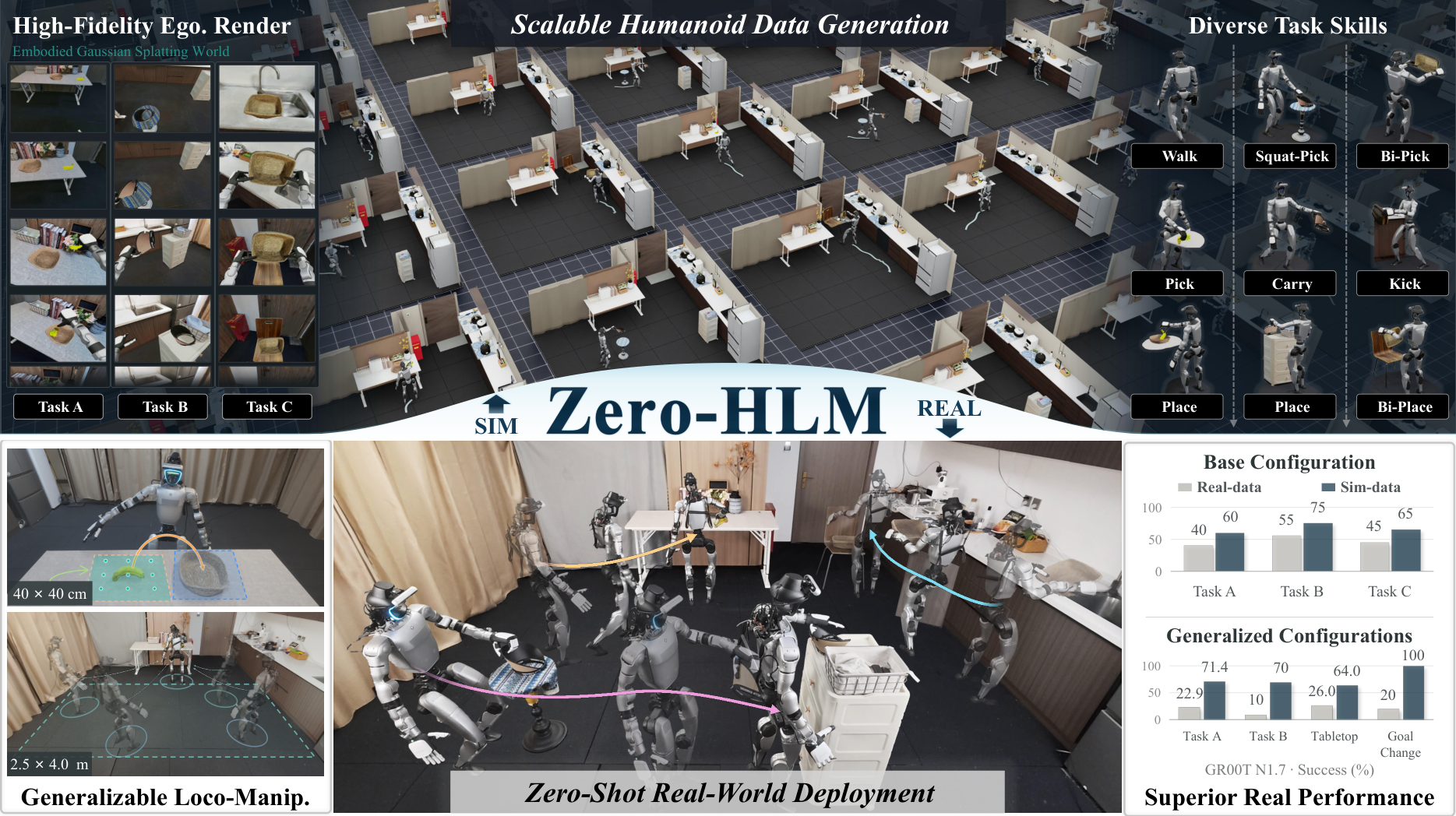
Zero-HLM is a real-to-sim-to-real framework that builds physics-ready scenes and executable whole-body references from smartphone captures and source demonstrations, then generates 4,800 validated demonstrations. It enables zero-shot transfer across Unitree G1 tasks, with sim-trained policies reaching 66.7% full-task success and generalized success rising from 23% to 69% without additional real data.
中文摘要: 本文提出Zero-HLM,一个从真实到仿真再到真实的框架,旨在无需昂贵真实数据即可学习可泛化的人形移动操作。方法利用手机拍摄与仿真源示范,通过高斯引导的智能体式真实到仿真重建对齐视觉与物理场景,并采用运动-环境协同自适应,利用rollout反馈修正全身参考和交互几何,生成4800条经物理验证的示范。在Unitree G1的三项任务上实现零样本迁移,仿真训练的GR00T N1.7达到66.7%平均完整任务成功率,优于真实数据训练的46.7%;在泛化配置下,仅扩展仿真训练即将池化成功率从23%提升到69%。
💬 A strong sim-to-real recipe showing that scalable, physically validated sim demonstrations can outperform scarce real data for whole-body loco-manipulation.
💬 这是一套有力的仿真到真实方案,表明可扩展、经物理验证的仿真示范在全身移动操作上可优于稀缺的真实数据。
Why read it / 推荐理由: Its real-to-sim reconstruction plus motion-environment co-adaptation pipeline is a transferable recipe for sim-to-real training of whole-body motion controllers. 其真实到仿真重建加运动-环境协同自适应的流程,对全身运动控制器的仿真到真实训练是一条可迁移的路线。
4. CoCarry: Contact-Support-Structured Retargeting for Dual-Humanoid Cooperative Carrying
CoCarry:面向双人形协同搬运的接触-支撑结构化重定向
Authors / 作者: Ziyu Lin, Shihang Du, Tianhang Wang, Xiaodong Liu, Runze Zhang, Zongyou Yu et al.
arXiv: 2610.32460 · PDF
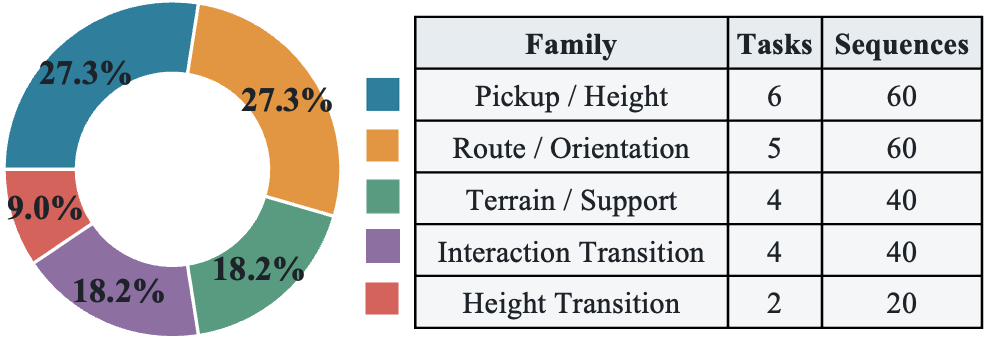
CoCarry introduces a 220-sequence two-person cooperative-carrying dataset spanning 21 task schemes and four terrain types, plus a Contact-Support-Structured Retargeting method that jointly refines two humanoids around a shared object trajectory while preserving four-hand grasp relations and coordinated support. It achieves 0.9995 contact preservation and cuts penetration duration by 67-71% versus baselines, with 100% retargeting success.
中文摘要: 本文针对双人形机器人协同搬运中跨智能体及智能体-物体关系一致性的难题,构建了CoCarry数据集,包含21种任务方案、5种共享物体几何、4类地形、约61分钟的220条同步双人序列。作者提出接触-支撑结构化重定向方法,从个体名义运动出发,围绕同一预设物体轨迹同步精化两个人形机器人:协作感知的物体局部手部锚点保持四手抓握一致,上层物体交互结构和下层支撑结构则保留物体相对几何与协同支撑,并通过优化保证平衡、接触与避碰。在全部220条序列上实现0.9995的接触保持率,相比GMR和OmniRetarget分别减少67.0%和71.0%的穿透时长,重定向成功率100%。
💬 Its contribution to coordinated support and contact-consistent retargeting is transferable to multi-legged platforms sharing a common object or body support.
💬 其在协同支撑与接触一致性重定向方面的贡献,可迁移到共享物体或共用机体支撑的多足平台。
Why read it / 推荐理由: The contact-and-support-structured retargeting formulation offers useful ideas for coordinated multi-agent whole-body control with shared support constraints. 其接触-支撑结构化重定向方法为带共享支撑约束的多智能体全身协调控制提供了有益思路。
5. HoloBoxing: A Simple Recipe for Humanoid Boxing with 7 Minutes of Single-GPU Training
HoloBoxing:仅需7分钟单GPU训练的人形拳击简易方案
Authors / 作者: Xihan Ma, Bo Zhang, Boxiong Li, Yuhan Bao, Ziyue Liu, Yucheng Wang
arXiv: 2610.32909 · PDF
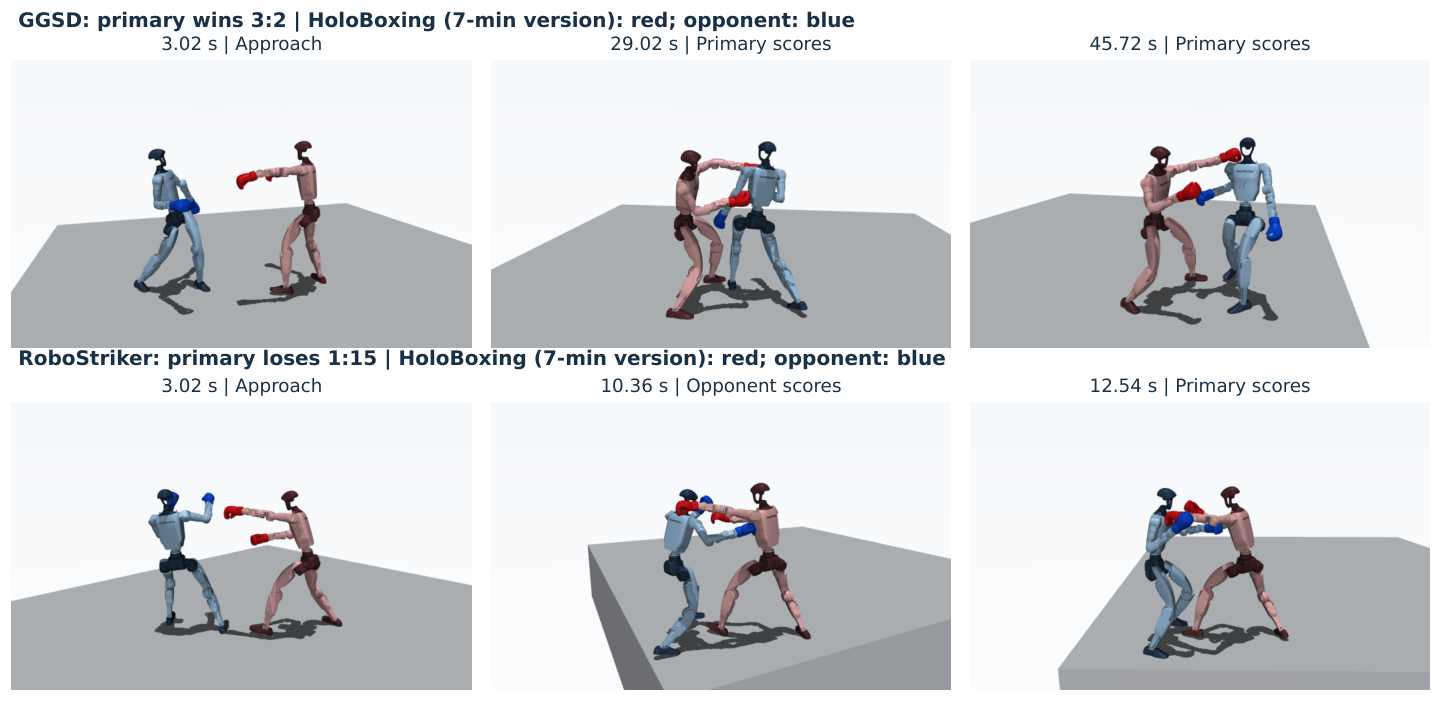
HoloBoxing builds on a frozen pretrained whole-body controller and separates reusable motor skills from task decisions, using a compact planner that outputs structured target windows via a learned 32-D decoder. Measured-state imitation initializes the planner before RL refinement, requiring only about seven minutes of additional single-GPU training while the frozen controller handles joint-level execution.
中文摘要: 本文提出HoloBoxing,一种基于预训练全身控制器的轻量人形拳击学习方案,将可复用的运动技能与任务决策分离。一个紧凑规划器通过学习的解码器把32维动作映射为结构化目标窗口,冻结的全身控制器负责关节级执行;先以测量状态模仿初始化规划器,再用强化学习精化交互行为,从而避免重新学习全身控制。该方案从已有控制器出发仅需约7分钟额外单GPU训练(含复用表示拟合与任务训练,不含控制器预训练、数据准备与评估),并在仿真拳击实验中通过消融验证了模仿初始化与目标表示的作用。
💬 A clean demonstration that freezing a pretrained whole-body controller and learning only a lightweight task policy drastically cuts training cost.
💬 该工作清晰展示了冻结预训练全身控制器、仅学习轻量任务策略可大幅降低训练成本。
Why read it / 推荐理由: The skill-decoupling and frozen-controller recipe is directly applicable to quickly retargeting new tasks onto an existing modular whole-body locomotion controller. 其技能解耦与冻结控制器的方案可直接用于将新任务快速迁移到已有的模块化全身运动控制器上。