机器人日报
机器人论文日报 — 2026-09-26
🤖 Scanned 225 papers from today’s arXiv announcement (cs.RO / eess.SY / cs.LG), picked 5 for modular & legged robotics — summarized by DeepSeek.
🤖 从今日 arXiv 新论文(cs.RO / eess.SY / cs.LG)中扫描 225 篇,围绕模块化与足式机器人精选 5 篇 — 由 DeepSeek 生成双语摘要。
1. Certified Predictive Value-of-Advice Gating for Cost-Aware Language-Model Guidance in Reinforcement Learning
面向强化学习中成本感知语言模型指导的认证预测建议价值门控
Authors / 作者: Ibne Farabi Shihab, Md Najmus Swaqeeb, Abu Sa-Adat Mohamed Moon-Im Al Ahsan
arXiv: 2609.29548 · PDF
The paper formulates advice acquisition as a response-contingent metareasoning problem: before querying a language model, the controller predicts parsed responses, evaluates the decision and continuation that would follow each response, and queries only when a lower confidence bound on predictive value exceeds the priced cost. On BabyAI with Qwen2.5-1.5B/7B advisors, the proxy-calibrated controller improves GoToObj return by about 0.03 over no querying while reducing calls by >97% compared to always-query, though GoToLocal is a null result.
中文摘要: 该文将强化学习中语言模型建议的获取形式化为响应依赖的元推理问题:查询前控制器预测可能的解析响应,评估每个响应后对应的决策与后续轨迹,仅当预测价值的下置信界超过标价成本时才查询。在 BabyAI 环境上,使用 Qwen2.5-1.5B 和 7B 作为顾问,代理校准控制器在 GoToObj 任务上比不查询提升约 0.03 回报,同时相对始终查询减少超过 97% 的调用;GoToLocal 为零结果。Mondrian 校准将决策相关经验覆盖率从 0.47 提升到 0.85,但形式覆盖半径为空。
💬 A principled metareasoning gate that makes costly external policy advice sparse and certifiable, though the demonstrated gains are modest and task-dependent.
💬 一个原则性的元推理门控,使昂贵的外部策略建议变得稀疏且可认证,但所展示的收益有限且依赖任务。
Why read it / 推荐理由: It provides a rigorous cost-aware gating formulation that could reduce expensive LLM advisor calls in modular robot control pipelines, even if robot validation is still missing. 它提供了严格的成本感知门控公式,可用于减少模块化机器人控制流水线中昂贵的 LLM 顾问调用,尽管尚缺机器人验证。
2. Graph-Based Inference and Topology-Aware Multi-Agent Reinforcement Learning for Large-Scale Railway Network Management
基于图推理与拓扑感知多智能体强化学习的大规模铁路网络管理
Authors / 作者: Giacomo Arcieri, Gregory Duthé, Christophe Muller, Konstantinos G. Papakonstantinou, Daniel Straub, Eleni Chatzi
arXiv: 2609.30150 · PDF
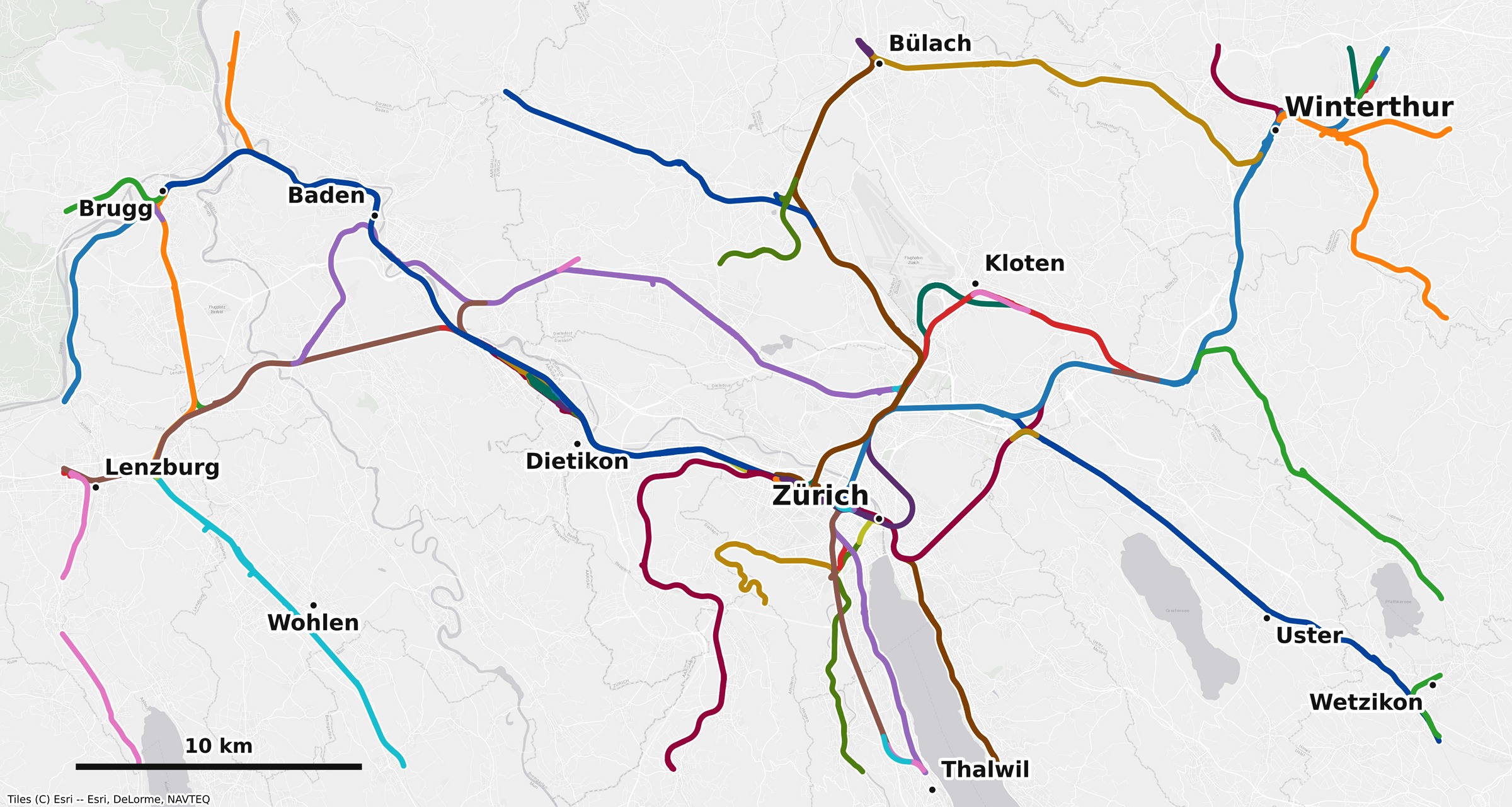
This work combines a hierarchical Bayesian Gaussian-process-on-graph model to infer spatially correlated railway deterioration from Swiss Federal Railways data with a topology-aware MARL framework using graph neural networks and graph Transformers. A key result is zero-shot transfer: agents trained on small network portions deploy on large unseen networks without retraining, demonstrating scalable network-level maintenance policy optimization.
中文摘要: 该工作首先使用基于图核的高斯过程分层贝叶斯模型,从瑞士联邦铁路真实数据中推断具有空间相关性的铁路劣化环境;随后提出拓扑感知的多智能体强化学习框架,集成图神经网络与图 Transformer 优化网络级维护策略。核心贡献是零样本迁移:仅在小型网络局部训练的图智能体可直接部署到大规模未见网络而无需再训练,证明大规模网络级决策的可扩展性。
💬 Demonstrates that graph-structured MARL can scale asset-management policies via zero-shot transfer, an idea directly analogous to modular multi-legged coordination and topology-aware locomotion control.
💬 证明图结构多智能体强化学习可通过零样本迁移扩展资产管理策略,这一思想可直接类比模块化多足协调与拓扑感知运动控制。
Why read it / 推荐理由: Its topology-aware GNN/graph-Transformer MARL and zero-shot transfer to unseen networks offer a scalable coordination paradigm relevant to reconfigurable modular legged robots. 其拓扑感知 GNN/图 Transformer 多智能体强化学习及对未见网络的零样本迁移,为可重构模块化足式机器人提供了可扩展的协调范式。
3. SLCA-GRPO: Resolving Cross-Segment Credit Misattribution in Tool-Calling RL
SLCA-GRPO:解决工具调用强化学习中的跨片段信用错误分配
Authors / 作者: Yan Zhan, Shaobo Liu, Qiunan Liu, Yuanjun Shi, Siqi Xu, WeiYi Hou et al.
arXiv: 2609.29050 · PDF
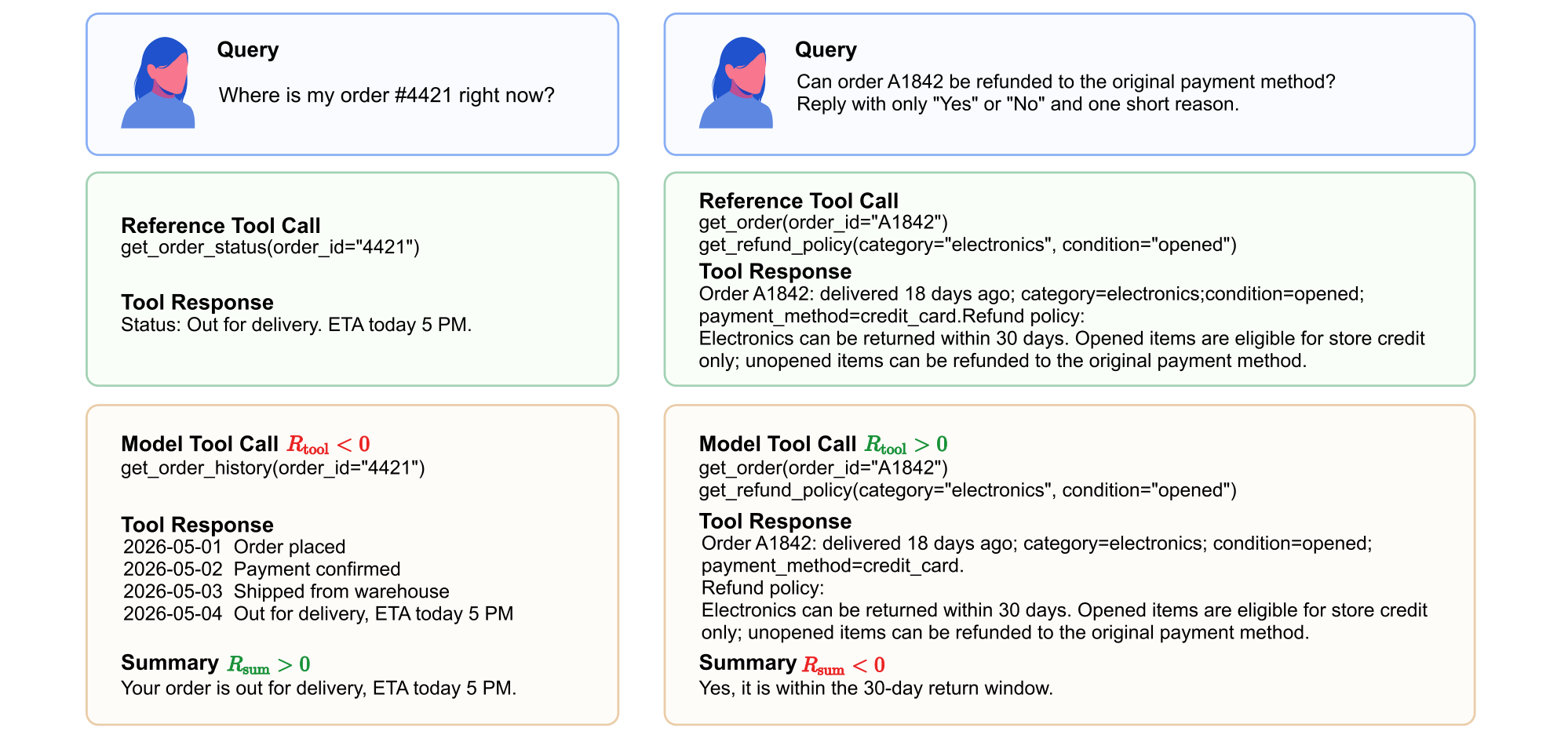
The paper identifies cross-segment credit misattribution in GRPO for tool-calling agents, where trajectory-level advantages contaminate tool-decision tokens with noise from summary generation. SLCA-GRPO introduces Segment-Locked Credit Assignment, which decouples advantage estimation at structural segment level within a single group of rollouts, using hierarchical rewards to route execution advantages to tool tokens and preference advantages to summary tokens; on a 7B backbone it outperforms GRPO, ToolPO, and RLTR by +2.53 pp in-domain.
中文摘要: 该文指出工具调用智能体在 GRPO 中因输出异构性导致跨片段信用错误分配:轨迹级标量优势被均匀广播至所有 token,摘要生成的梯度噪声污染工具决策 token。SLCA-GRPO 提出片段锁定信用分配,在单组 rollout 内按结构片段解耦优势估计,并用分层奖励将执行优势路由至工具 token、偏好优势路由至摘要 token,消除优势污染。在 7B 模型上,该方法在域内评估超过 GRPO、ToolPO 和 RLTR 达 +2.53 个百分点。
💬 A focused fix for heterogeneous-output credit assignment that could help separate locomotion-phase rewards from high-level task rewards in hierarchical legged RL.
💬 针对异构输出信用分配的聚焦修复,有助于在分层足式强化学习中分离运动相位奖励与高层任务奖励。
Why read it / 推荐理由: Its segment-level credit assignment idea is transferable to separating gait-phase control tokens from high-level navigation decisions in modular legged RL. 其片段级信用分配思想可迁移至模块化足式强化学习中,用于分离步态相位控制 token 与高层导航决策。
4. PoEM: Predicting RL Outcomes from Existing Policies
PoEM:从已有策略预测强化学习结果
Authors / 作者: Kimia Hamidieh, Giannis Daras, Antonio Torralba
arXiv: 2609.30226 · PDF
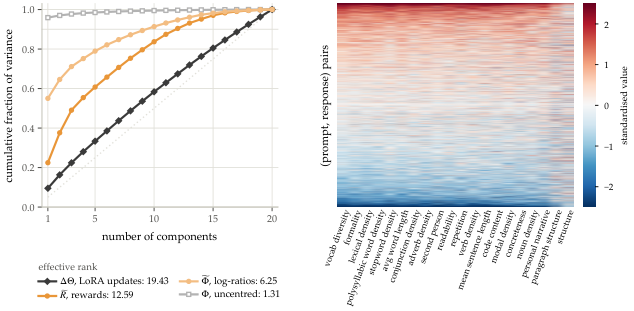
PoEM asks whether RL post-training outcomes for a new reward function can be predicted without running RL, using models already post-trained on other rewards. It shows that if the new reward is a linear combination of existing rewards, the new log-policy is a linear combination of existing log-policies, and empirically log-policies often span an approximately low-rank subspace across rewards; coefficients are estimated from reward or basis policy outputs, yielding a training-free policy approximation.
中文摘要: PoEM 研究能否不运行强化学习、仅利用已在其他奖励上后训练过的模型来预测新奖励函数的 RL 结果。文中证明:若新奖励可写成已有奖励的线性组合,则新对数策略可写成已有对数策略的线性组合;实验还发现即使奖励非线性相关,RL 训练得到的对数策略在不同奖励间常近似张成低秩子空间。组合系数可仅由奖励或基策略在样本上的输出估计,从而免训练近似目标 RL 策略。
💬 Suggests policy reuse via reward-space composition, which could accelerate sim-to-real retuning when adding or changing reward terms for a modular legged platform.
💬 提出通过奖励空间组合实现策略复用,可在为模块化足式平台增删或修改奖励项时加速 sim-to-real 调参。
Why read it / 推荐理由: It opens a training-free path to adapt locomotion policies when reward functions or module configurations change, reducing the RL retraining burden. 它开辟了免训练路径,在奖励函数或模块构型变化时自适应运动策略,减轻强化学习重训练负担。
5. Temporal Gradient Inversion for Private Trajectory Reconstruction in Embodied Reinforcement Learning
具身强化学习中面向私有轨迹重建的时序梯度反演
Authors / 作者: Sudip Bhujel, Shanghao Shi, Ruiquan Huang, Ning Zhang, Yang Xiao
arXiv: 2609.30258 · PDF
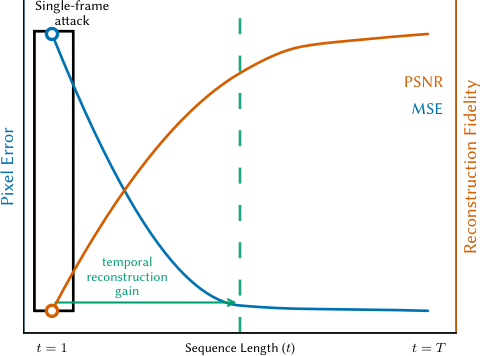
TRACE is an amortized temporal gradient-inversion attack that autoregressively reconstructs private observation-action trajectories from per-step policy-learning gradients in distributed embodied RL. It exploits cross-time correlation between successive embodied gradients, formalized via a conditional mutual-information bound, and proves exact action recovery from policy-head gradient structure when entropy regularization is small; it reaches 18.8 dB PSNR and near-perfect action recovery at 3-4.5 ms per frame while dominating single-frame baselines.
中文摘要: TRACE 是一种摊销式时序梯度反演攻击,可从分布式具身强化学习中每步策略学习梯度自回归地重建私有观测-动作轨迹。它利用相邻具身梯度间的跨时间相关性,并用条件互信息界形式化,同时证明在熵正则足够小时可由策略头梯度结构精确恢复动作。在保留的具身场景上,TRACE 达到 18.8 dB PSNR 与近乎完美的动作恢复,每帧仅需 3-4.5 毫秒,在所有重建指标上优于单帧基线。
💬 Highlights a real privacy leakage channel in distributed embodied RL that any fleet of modular legged robots sharing gradients must consider.
💬 揭示了分布式具身强化学习中真实的隐私泄露通道,任何共享梯度的模块化足式机器人集群都必须考虑。
Why read it / 推荐理由: As modular legged robots may use distributed on-device RL for sim-to-real, this attack exposes a concrete trajectory-privacy risk and motivates defenses. 模块化足式机器人若采用分布式端侧强化学习进行 sim-to-real,该攻击暴露了具体的轨迹隐私风险并促使设计防御。