机器人日报
机器人论文日报 — 2026-09-15
🤖 Scanned 538 papers from today’s arXiv announcement (cs.RO / eess.SY / cs.LG), picked 5 for modular & legged robotics — summarized by DeepSeek.
🤖 从今日 arXiv 新论文(cs.RO / eess.SY / cs.LG)中扫描 538 篇,围绕模块化与足式机器人精选 5 篇 — 由 DeepSeek 生成双语摘要。
1. Extending the Speed Limit of Quadrupedal Locomotion via Refined Actuator Modeling and Adaptive Command Scheduling
通过精细化执行器建模与自适应指令调度扩展四足机器人运动速度极限
Authors / 作者: Yucheng Tao, Shaowen Cheng, Guorong Lan, Yanyan Yuan, Yongbin Jin, Hongtao Wang
arXiv: 2609.13289 · PDF
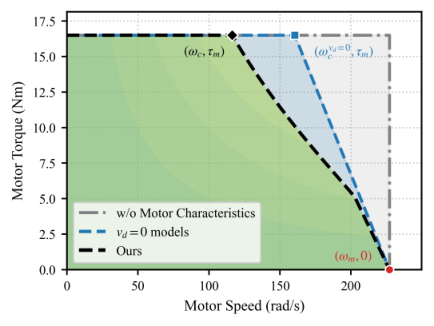
This paper proposes a high-speed locomotion framework that reduces sim-to-real discrepancies by explicitly modeling actuator nonlinearities such as high-speed voltage coupling and magnetic saturation. It also introduces a two-stage curriculum and adaptive command scheduling (ACS) for stable reinforcement learning over a wide command distribution. Experiments on the 36.5 kg quadruped BlackPanther2 achieve a record speed of 13.2 m/s on a treadmill and 11.65 m/s outdoors, demonstrating the importance of accurate actuator modeling and robust training.
中文摘要: 本文提出了一种高速运动框架,通过显式建模执行器非线性(如高速电压耦合和磁饱和)来缩小仿真到现实的差距。该框架还引入两阶段课程学习和自适应指令调度(ACS),以在广泛指令分布下实现稳定的强化学习训练。在36.5公斤的四足机器人BlackPanther2上,实验实现了跑步机上13.2 m/s和户外11.65 m/s的速度记录,强调了精确执行器建模和鲁棒训练的重要性。
💬 The refined actuator model and ACS are directly applicable to modular legged robots seeking high-speed, robust locomotion.
💬 精细化执行器模型和自适应指令调度可直接应用于模块化腿部机器人,以实现高速鲁棒运动。
Why read it / 推荐理由: This work sets a new speed record for quadrupeds and provides practical insights into actuator modeling and sim-to-real transfer for dynamic locomotion. 这项工作创下了四足机器人速度新纪录,并为动态运动中的执行器建模和仿真到现实迁移提供了实用见解。
2. Breaking speed scaling in quadrupedal robots via Huygens’ coupled-pendulum dynamics
通过惠更斯耦合摆动力学打破四足机器人速度缩放
Authors / 作者: Yucheng Tao, Yongbin Jin, Shaowen Cheng, Xianwei Liu, Yanyan Yuan, Yanhong Liang et al.
arXiv: 2609.13290 · PDF
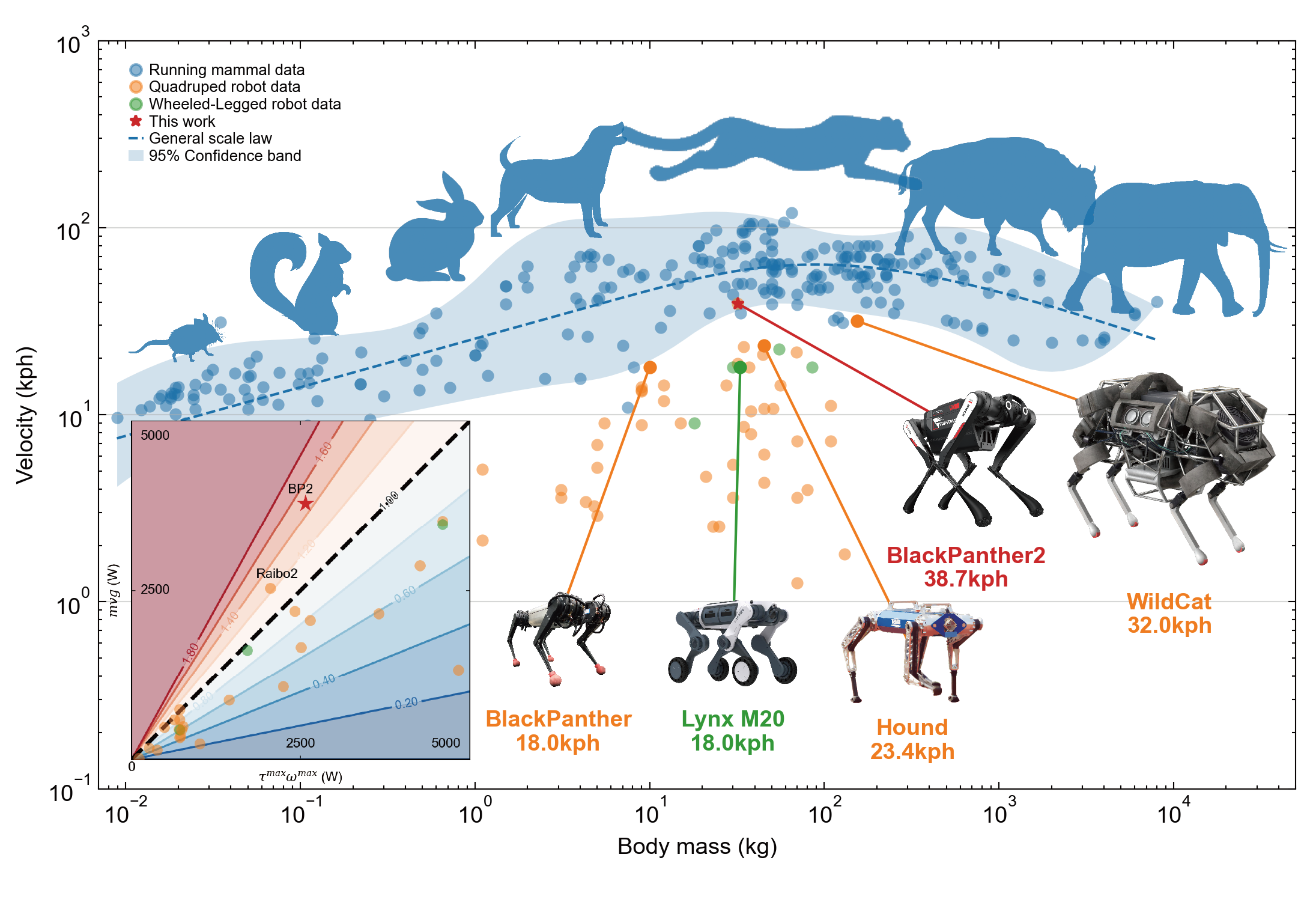
Inspired by Huygens’ coupled pendulums, this paper demonstrates that inter-limb inertial coupling can redistribute energy across the gait cycle and reduce peak joint torque, enabling higher speeds without proportional actuator scaling. A co-optimization framework incorporating hardware parameters systematically utilizes inertial coupling in robot design. A quadruped robot achieves 10.74 m/s (Froude number 21.4) and completes a 100-meter sprint in 12.2 seconds, the first legged robot to surpass 10 m/s.
中文摘要: 受惠更斯耦合摆启发,本文证明肢间惯性耦合可以在步态周期中重新分配能量并降低峰值关节扭矩,从而在不比例增加执行器能力的情况下实现更高速度。一个将硬件参数作为设计变量的协同优化框架系统地将惯性耦合应用于机器人设计。一台四足机器人实现了10.74 m/s的速度(弗劳德数21.4),并在12.2秒内完成100米冲刺,成为首个突破10 m/s的腿式机器人。
💬 The concept of inertial coupling is highly relevant for modular legged robots, offering a design principle to enhance speed and efficiency.
💬 惯性耦合的概念与模块化腿部机器人高度相关,为提升速度和效率提供了设计原理。
Why read it / 推荐理由: This paper introduces a novel dynamics-based approach to breaking speed limits, with potential implications for the design of agile modular legged systems. 本文引入了一种基于动力学的新方法来突破速度限制,对敏捷模块化腿部系统的设计具有潜在意义。
3. JEPLO: Joint-Embedding Predictive Learning for LiDAR-Based Legged Locomotion
JEPLO:基于联合嵌入预测学习的激光雷达腿式运动
Authors / 作者: Qihao Yuan, Yixuan Qiu, Ziyu Cao, Ming Cao, Kailai Li
arXiv: 2609.15770 · PDF
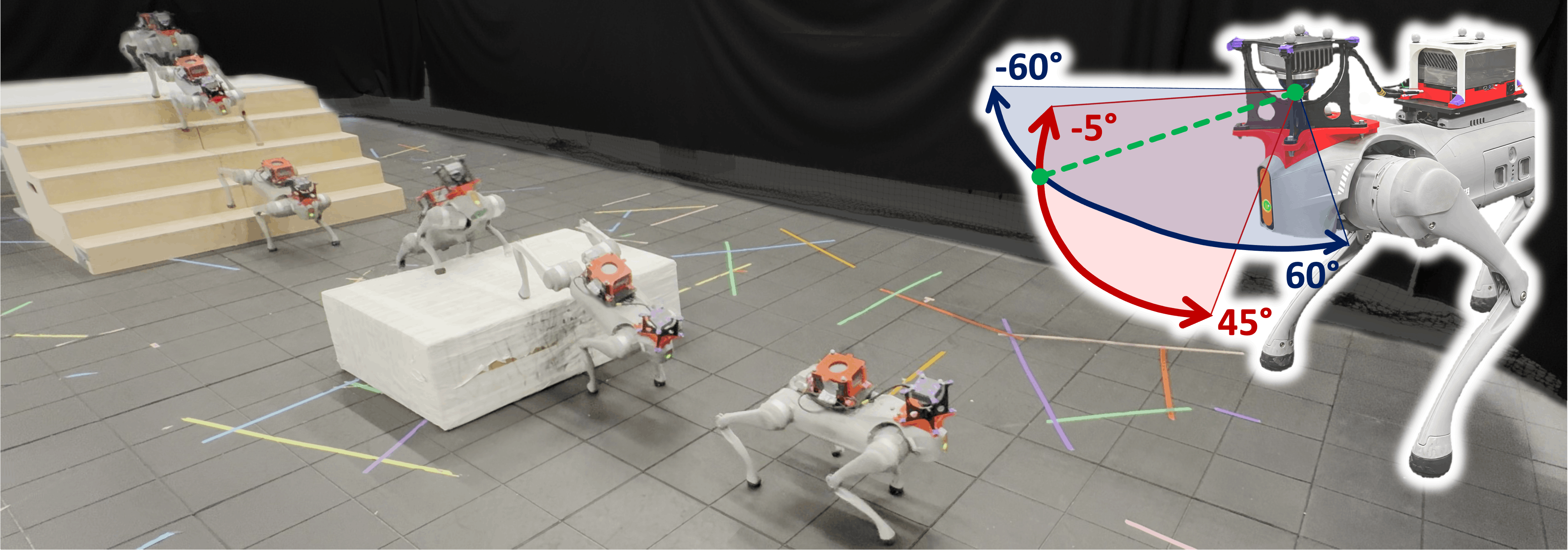
JEPLO is a single-stage learning framework for mapping-free, LiDAR-based perceptive locomotion. It introduces a proprio-exteroceptive JEPA world model to learn predictive egocentric terrain representations from raw LiDAR scans, and a JEPA-teacher-student pipeline to train a locomotion policy in simulation. The framework achieves successful sim-to-real transfer for omnidirectional traversal of diverse terrains, showing robustness under degraded perception and outperforming existing methods.
中文摘要: JEPLO是一个单阶段学习框架,用于无建图的、基于激光雷达的感知运动。它引入本体-外感JEPA世界模型,从原始激光雷达扫描中学习预测性自我中心地形表示,并提出JEPA教师-学生管道在仿真中训练运动策略。该框架成功实现了仿真到现实的迁移,能够全方位穿越多样地形,在感知退化情况下表现出鲁棒性,并优于现有方法。
💬 The mapping-free LiDAR approach and JEPA-based representation learning are directly applicable to modular legged robots requiring robust perception.
💬 无建图的激光雷达方法和基于JEPA的表示学习可直接应用于需要鲁棒感知的模块化腿部机器人。
Why read it / 推荐理由: This work advances LiDAR-based perceptive locomotion and demonstrates robust sim-to-real transfer, which is crucial for modular legged robots in real-world environments. 这项工作推进了基于激光雷达的感知运动,并展示了鲁棒的仿真到现实迁移,这对模块化腿部机器人在真实环境中的应用至关重要。
4. Force-Aware Reinforcement Learning with Hybrid Sensorless Force Estimation for Wheeled-Legged Loco-Manipulation
基于混合无传感器力估计的力感知强化学习用于轮腿式移动操作
Authors / 作者: Xuanqi Zeng, Jiaming Wang, Tianlin Zhang, Lingwei Zhang, Botian Xu, Weipeng Xia et al.
arXiv: 2609.13779 · PDF
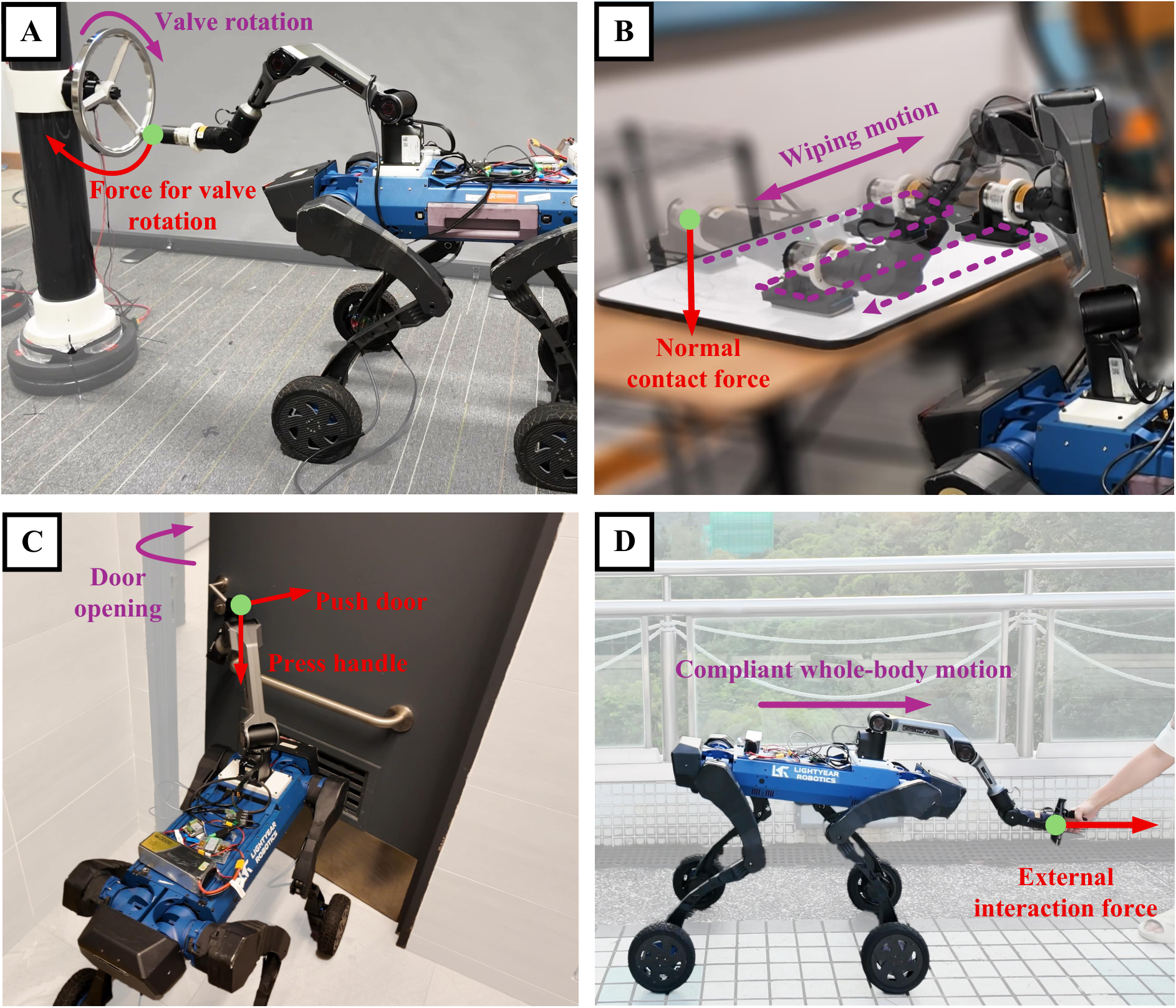
This paper presents a force-aware reinforcement learning approach with hybrid sensorless force estimation for wheeled-legged loco-manipulation. The method combines generalized momentum observation, contact-constrained wrench projection, and temporal residual learning to estimate end-effector forces without a force/torque sensor. The estimated force is integrated into a mode-conditioned whole-body policy with an axis-wise force/position selector, enabling free-space motion, pure force regulation, and hybrid force/position control. Simulation and hardware experiments validate improved sensorless force estimation and control performance.
中文摘要: 本文提出了一种基于混合无传感器力估计的力感知强化学习方法,用于轮腿式移动操作。该方法结合广义动量观测、接触约束力旋量投影和时间残差学习,无需力/扭矩传感器即可估计末端执行器力。估计的力被集成到模式条件全身策略中,并带有轴向力/位置选择器,实现自由空间运动、纯力调节和混合力/位置控制。仿真和硬件实验验证了改进的无传感器力估计和控制性能。
💬 The whole-body control with sensorless force estimation is highly relevant for modular legged robots performing manipulation tasks.
💬 无传感器力估计的全身控制与执行操作任务的模块化腿部机器人高度相关。
Why read it / 推荐理由: This paper offers a practical solution for force-controlled loco-manipulation without force sensors, with potential for modular legged robots. 本文为无力传感器的力控移动操作提供了实用解决方案,对模块化腿部机器人具有潜力。
5. X-WBC: A Cross-Embodiment Foundation Model for Humanoid Whole-Body Control
X-WBC:面向人形全身控制的跨具身基础模型
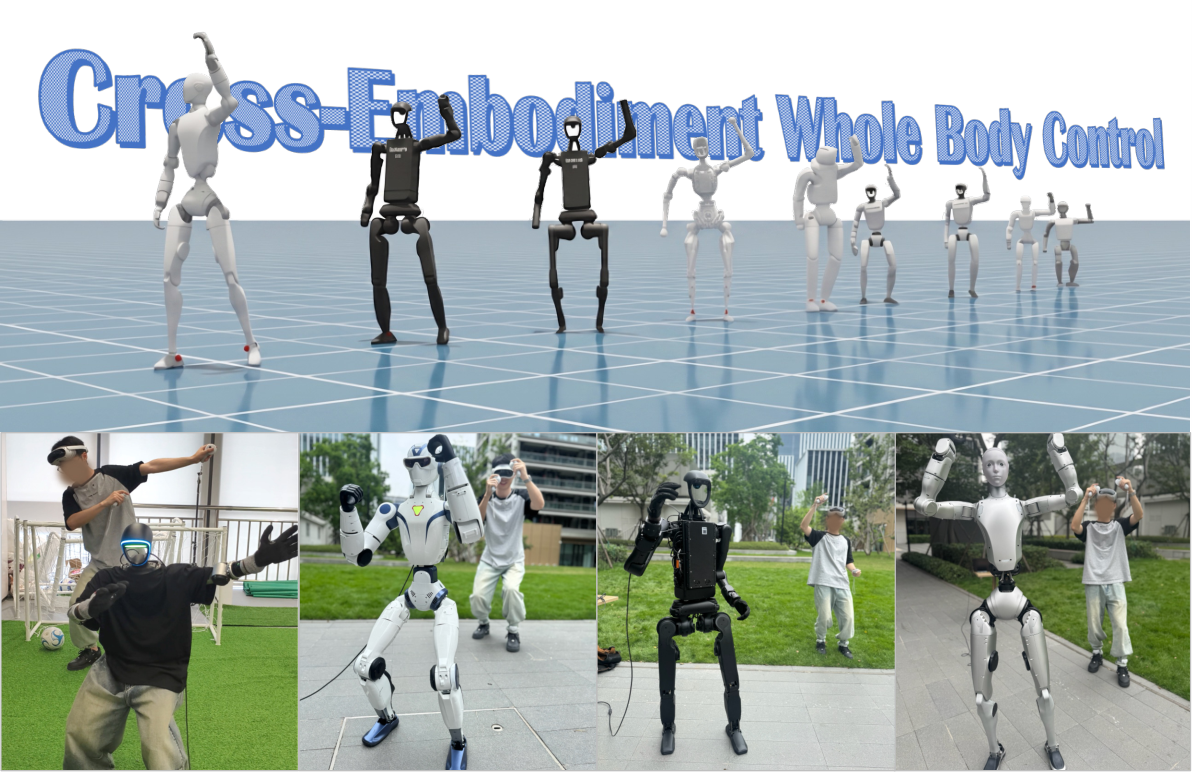
Authors / 作者: Juntong Zhang, Chun Gu, Li Zhang
arXiv: 2609.15213 · PDF
X-WBC is a cross-embodiment foundation framework that separates human motion semantics from embodiment-specific execution. It uses human-centered command tokens to align full human motion, robot reference motion, and sparse VR observations, and a causal Transformer to learn reusable temporal structure from mixed multi-robot rollouts. Across nine simulated embodiments and four real robots, joint training improves tracking and supports consistent control across command sources, establishing cross-embodiment joint training as a practical route toward whole-body control foundation models.
中文摘要: X-WBC是一个跨具身基础框架,将人体运动语义与具身特定执行分离。它使用以人为中心的命令令牌来对齐完整人体运动、机器人参考运动和稀疏VR观测,并使用因果Transformer从混合多机器人数据中学习可重用的时间结构。在九个仿真具身和四个真实机器人上,联合训练提高了跟踪性能,并支持跨命令源的一致控制,确立了跨具身联合训练作为全身控制基础模型的实用途径。
💬 The cross-embodiment framework is directly relevant for modular legged robots, where a single policy could adapt to different leg configurations.
💬 跨具身框架与模块化腿部机器人直接相关,其中单一策略可以适应不同的腿配置。
Why read it / 推荐理由: This paper presents a foundation model approach that could enable scalable learning for modular legged robots with varying morphologies. 本文提出了一种基础模型方法,可为形态各异的模块化腿部机器人实现可扩展学习。