机器人日报
机器人论文日报 — 2026-08-28
🤖 Scanned 222 new arXiv papers (cs.RO / eess.SY / cs.LG, last 48 h), picked 5 for modular & legged robotics — summarized by DeepSeek.
🤖 扫描了近 48 小时 arXiv(cs.RO / eess.SY / cs.LG)的 222 篇新论文,围绕模块化与足式机器人精选 5 篇 — 由 DeepSeek 生成双语摘要。
1. Tensegrity Continuum Robots Enable Task-Adaptive Morphologies for Cooperative Behaviors
张拉整体连续体机器人实现任务自适应形态与协同行为
Authors / 作者: Mahmud Hasan Saikot, Sydney Spiegel, Sudheera Akalanka Kariyawasam, Andrew Stefka, Josh Chrisler, Jianguo Zhao
arXiv: 2608.27221 · PDF
This paper presents a modular reconfigurable robot combining a tensegrity-based compliant body with claw-based connections. Individual units can manipulate and locomote independently, and self-reconfigure into chains, loops, and branches for cooperative manipulation and locomotion. Real-world demonstrations show coordinated object transport, multimodal locomotion, and loco-manipulation.
中文摘要: 本文介绍了一种将基于张拉整体的柔性本体与爪式连接机构相结合的模块化可重构机器人。每个模块可独立操纵和移动,并能自重构为链状、环状、分支等多种形态,以完成协同操纵与移动任务。在真实世界中验证了协同物体搬运、多模态运动及运动-操纵复合能力。该方法融合了刚性模块的可重构性与连续体的柔顺性,为可适应多任务环境的机器人集群奠定了基础。
💬 A novel integration of tensegrity and modular reconfiguration directly targets reconfigurable robot morphologies.
💬 将张拉整体与模块化重构创新结合,直接面向可重构机器人形态。
Why read it / 推荐理由: Directly addresses reconfigurable modular robots with multiple locomotion and manipulation capabilities, aligning with the reader’s core focus. 直接关注可重构模块化机器人,具备多种运动与操纵能力,与读者核心研究方向高度契合。
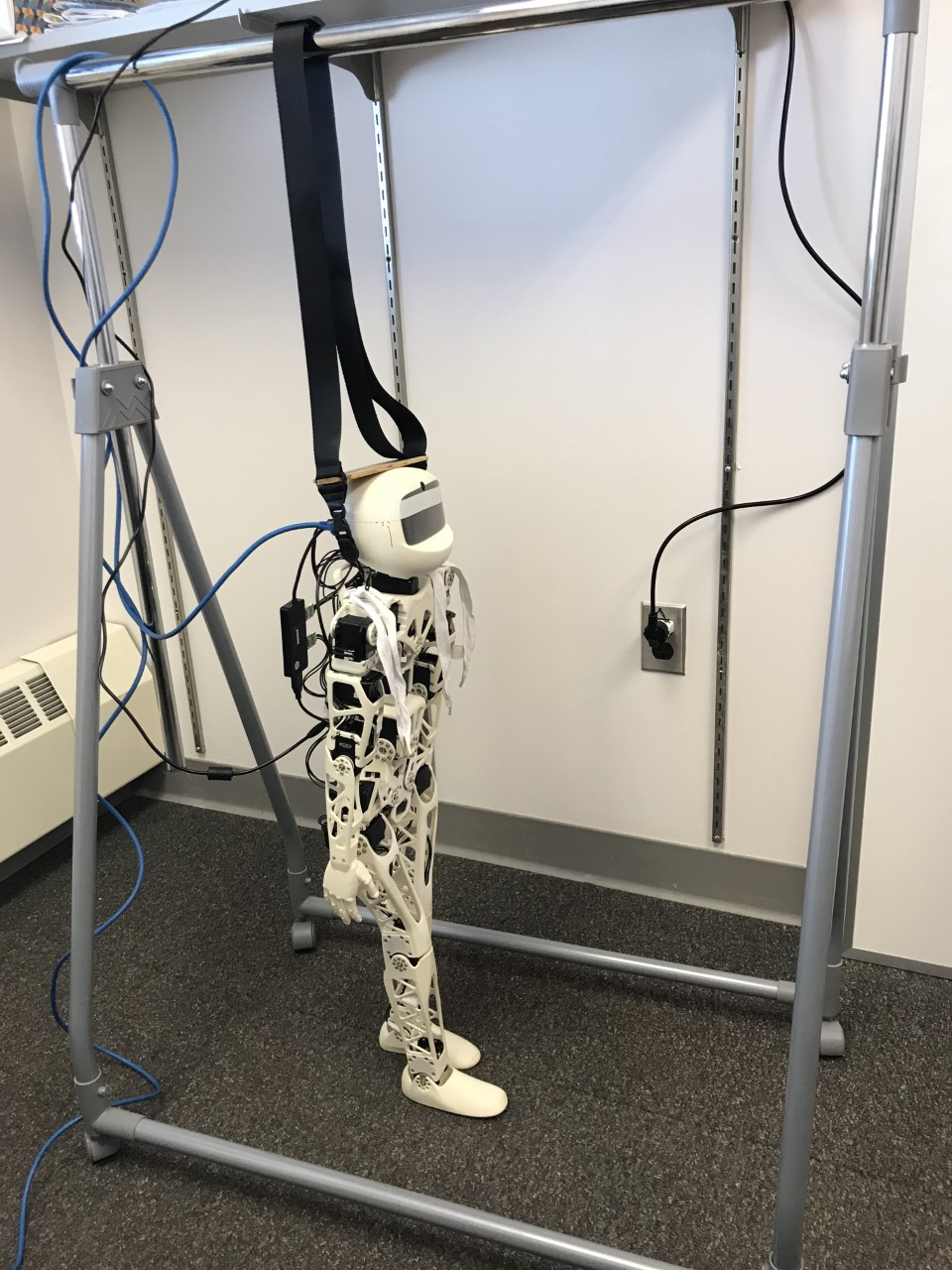
2. Closing the Loop on the Poppy Humanoid: Bipedal Locomotion with Linear-Quadratic Control and Learned Cost Functions
Poppy人形机器人闭环控制:线性二次调节器与学习代价函数的双足运动
Authors / 作者: Xulin Chen, Borui He, Ruipeng Liu, Naveed Tahir, Zhenyu Gan, Garrett E. Katz
arXiv: 2608.26505 · PDF
This work develops a closed-loop walking controller for the Poppy Humanoid using LQR with a learned quadratic cost. Starting from open-loop trajectory data, the cost is learned to improve reliability. Empirical validation shows statistically significant improvements over open-loop playback.
中文摘要: 本文为Poppy人形机器人开发了一种基于LQR的闭环行走控制器,并学习二次代价函数以提升轨迹跟踪可靠性。基于开环轨迹数据学习代价函数,显著改善了运动稳定性。实验验证表明,与开环轨迹回放相比,性能有显著提升。这项工作为低成本人形平台提供了实用的闭环运动控制方法。
💬 A solid example of combining learning from trajectory data with LQR for legged locomotion, with hardware validation.
💬 将轨迹数据学习与LQR结合用于腿式运动控制的典型范例,并实机验证。
Why read it / 推荐理由: Relevant to model-based control and learned cost functions for bipedal robots; hardware results demonstrate practical applicability. 与双足机器人的基于模型控制与学习代价函数相关,实机结果展示其实用性。
3. SOLO: Stable Omni-terrain Long-Horizon Perceptive Humanoid Locomotion
SOLO:稳定全地形长时程感知人形运动
Authors / 作者: Pihai Sun, Gang Han, Jingkai Sun, Jiahao Ma, Zeran Su, Zelin Tao et al.
arXiv: 2608.26583 · PDF
SOLO introduces a framework for long-horizon perceptive humanoid locomotion, combining a Query Reconstructor that preserves terrain details and Trajectory-Aware MSE distillation for temporal credit assignment. It achieves high success on stress-test terrains and is deployed zero-shot on a 1.5-km outdoor route with a chest depth camera.
中文摘要: SOLO提出面向长时程感知人形行走的统一框架,包含保留地形细节的查询重建器和用于时序信用分配的轨迹感知MSE蒸馏。在压力测试地形上分别获得97.5%和96%的穿越与踏石成功率,并零样本部署到1.5公里户外路线。仅使用胸部深度相机与本体感觉即可完成连续行走,兼顾了感知与控制的鲁棒性。
💬 A strong RL-based locomotion framework with sim-to-real transfer and impressive long-horizon outdoor performance.
💬 基于强化学习的运动控制框架,具备出色的sim-to-real迁移和户外长时程表现。
Why read it / 推荐理由: Shows state-of-the-art RL-based locomotion and sim-to-real transfer, highly relevant to motion control for legged robots. 展示了最先进的RL运动控制与sim-to-real迁移,对腿式机器人运动控制高度相关。
4. Arrive and Survive: Scaling Safe Goal-Conditioned Policy Learning from One-Bit Failure Signals
到达与存活:基于一位失败信号的安全目标条件策略学习扩展

Authors / 作者: Guopeng Li, Yiyang Duan, Yiru Jiao, Chengcheng Xu
arXiv: 2608.26571 · PDF
This paper identifies a bias in contrastive RL for failure-terminated MDPs and proposes Safe-CRL with mass-weighted InfoNCE and log-survival-mass corrections. It requires only one-bit failure signals and consistently improves survival across twelve navigation and locomotion tasks.
中文摘要: 本文提出Safe-CRL,针对失败终止MDP中的对比RL偏差,引入质量加权InfoNCE和对数生存质量校正。仅需一位失败信号即可扩展安全目标条件策略学习。在十二个机器人导航与运动任务中,Safe-CRL一致提升成功率,并显著超越现有方法,为安全强化学习提供轻量而有效的修正方案。
💬 A theoretically grounded RL improvement applicable to safety-critical locomotion, with consistent gains across diverse tasks.
💬 具有理论基础的RL改进,适用于安全关键运动,并在多个任务中取得一致提升。
Why read it / 推荐理由: Directly relevant to RL-based motion control with safety considerations, a key aspect of legged robot learning. 直接涉及考虑安全的RL运动控制,是腿式机器人学习的关键方面。
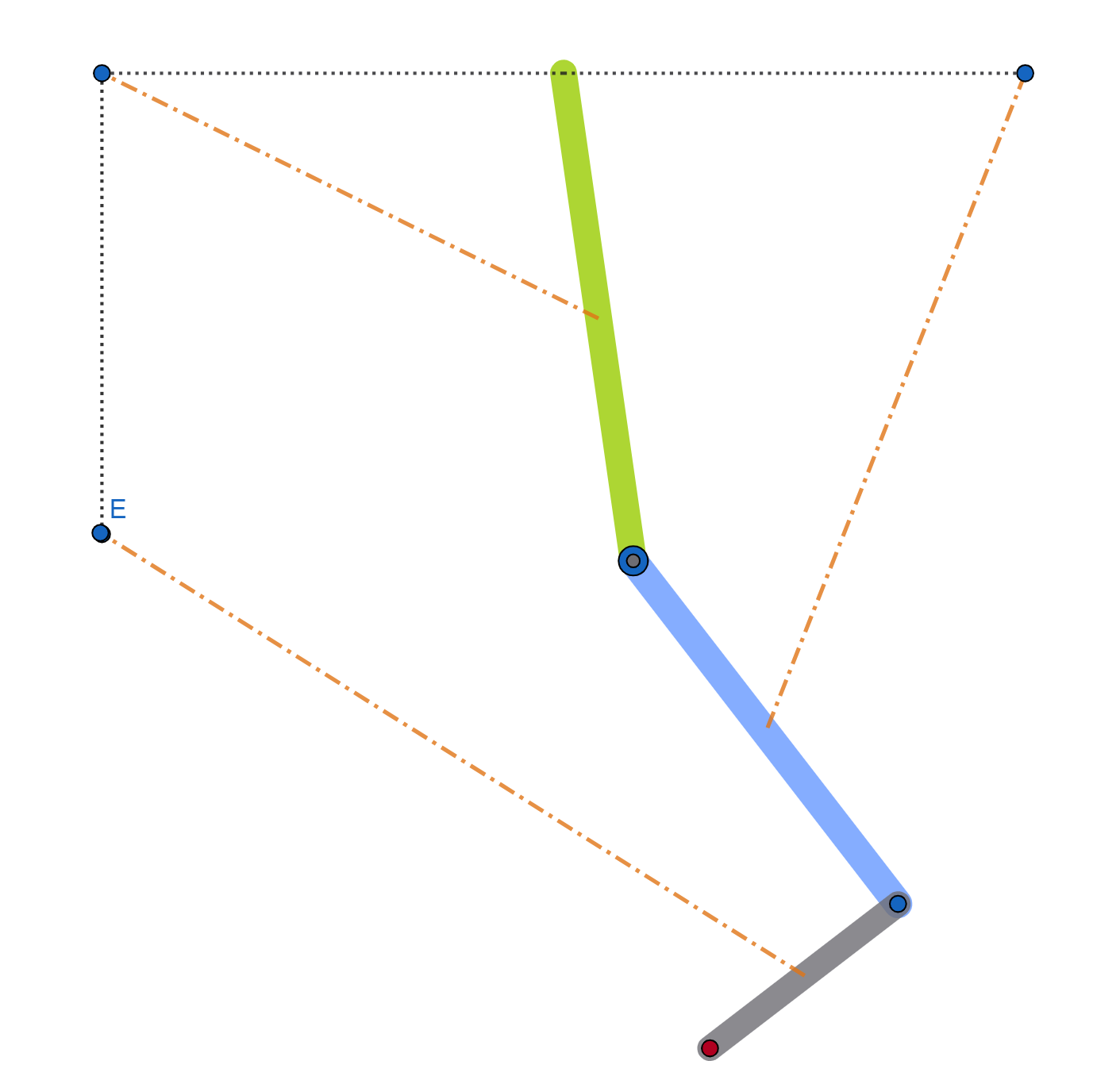
5. Residual Deep Reinforcement Learning-Based Computed Torque Control for a Cable-Driven Lower-Limb Rehabilitation Robot under Disturbances and Parametric Uncertainties
基于残差深度强化学习的缆索驱动下肢康复机器人计算力矩控制在扰动与参数不确定性下的应用
Authors / 作者: Mohammad-Hossein Fakouri, Ali Keymasi-Khalaji
arXiv: 2608.26739 · PDF
This paper proposes a residual DDPG-enhanced computed torque control framework for a cable-driven lower-limb rehab robot. The model-based controller provides the nominal command, while the RL policy compensates for disturbances. Simulation results show improved tracking and disturbance rejection while maintaining interpretability.
中文摘要: 本文提出一种残差深度强化学习增强的计算力矩控制框架,应用于缆索驱动下肢康复机器人。计算力矩控制器提供名义命令,有界的DDPG策略补偿残余误差。仿真表明该方法在多种不确定性和扰动条件下均改善轨迹跟踪与抗扰能力,同时保留了模型基控制的可解释性,并满足关节约束与可行性检查。
💬 A practical hybrid model-based/RL control approach for lower-leg dynamics, relevant to legged robot control.
💬 一种实用的模型基与RL混合控制方法,适用于下肢动力学,与腿式机器人控制相关。
Why read it / 推荐理由: Offers insights into combining model-based control with residual RL for legged mechanisms, which can be transferred to modular legged platforms. 提供将模型基控制与残差RL结合用于腿式机构的见解,可迁移至模块化腿式平台。