Robotics Digest
Robotics Paper Digest — 2026-11-07
🤖 Scanned 80 papers from the last 3 days of arXiv announcements (cs.RO / eess.SY / cs.LG), picked 5 for modular & legged robotics — summarized by DeepSeek.
🤖 从近 3 天的 arXiv 新论文(cs.RO / eess.SY / cs.LG)中扫描 80 篇,围绕模块化与足式机器人精选 5 篇 — 由 DeepSeek 生成双语摘要。
1. Beyond Terminal Constraints: Reliable Robot Control with Learned Safe Sets
超越终端约束:基于学习安全集的可靠机器人控制
Authors / 作者: Gianni Lunardi, Elias Fontanari, Matteo Saveriano, Andrea Del Prete
arXiv: 2611.06196 · PDF
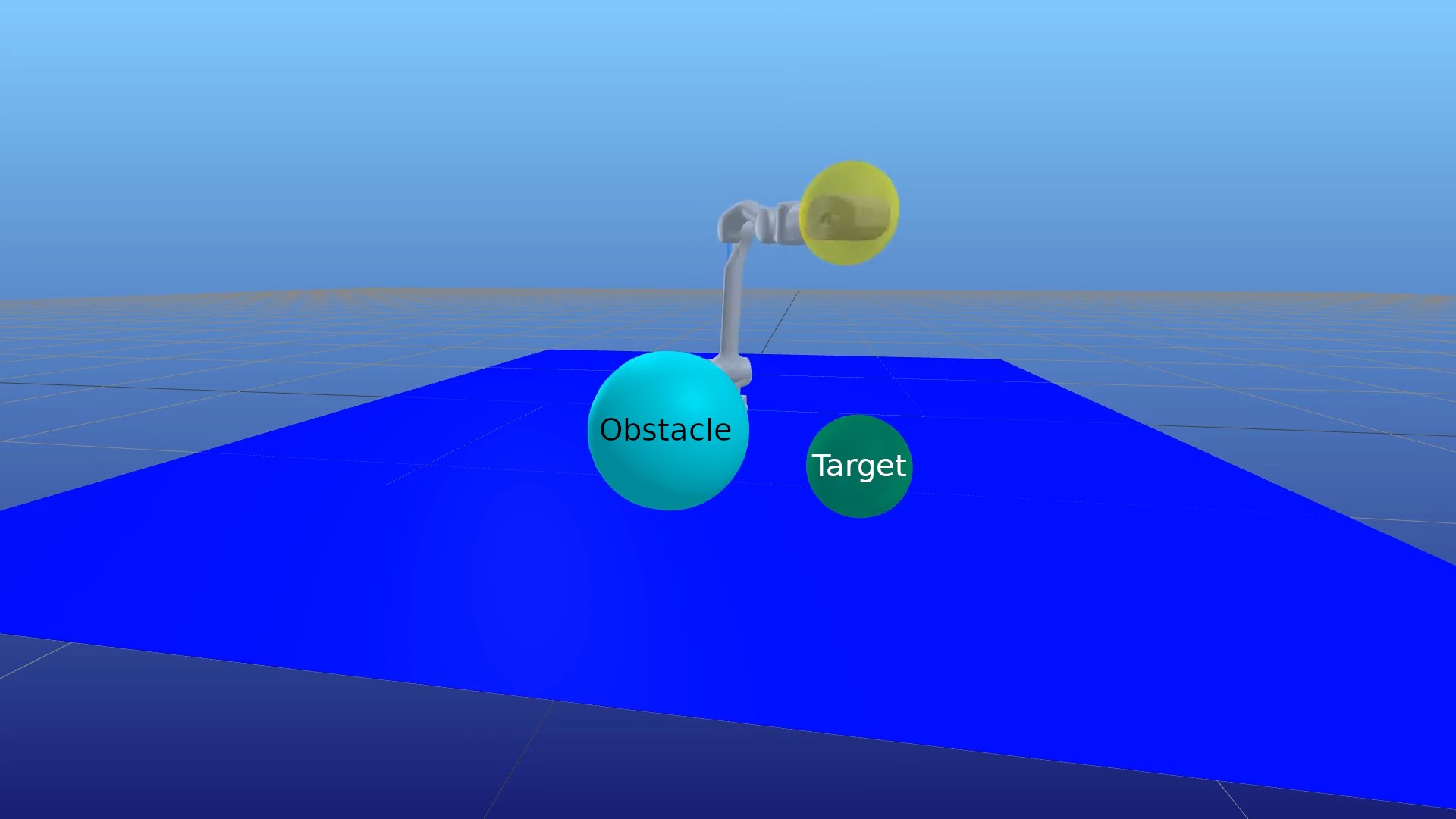
The paper relaxes the classical reliance on control-invariant terminal sets in MPC by introducing broader classes of safe sets and constraining multiple nodes along the prediction horizon to guarantee recursive feasibility. It shows that when the learned safe set inner-approximates a control-invariant set, a safe-abort strategy still ensures safety without recursive feasibility. Simulations on a 6-joint manipulator and hardware experiments show fewer constraint violations at comparable tracking performance and computation.
中文摘要: 本文针对MPC与强化学习中的安全性保障问题,指出现有方法过度依赖控制不变集,而非线性系统的精确不变集通常不可求,数值近似又会破坏理论保证。作者提出若干比经典控制不变集更宽泛的新型安全集,并分析了在预测时域的不同节点(而非仅终端状态)施加约束以保证递归可行性的MPC方案。进一步地,当安全集是某个合适控制不变集的内近似时,即使不具备递归可行性,也可通过安全中止策略保证安全。在六关节机械臂上的大量仿真表明,该方法相比现有方法约束违反更少,同时保持相当的跟踪性能与计算效率,硬件实验验证了其实用性。
💬 A clean theoretical reframing of terminal-set MPC that makes learned safety sets usable for constrained whole-body and legged controllers.
💬 该工作对终端集MPC做了清晰的理论重构,使学习到的安全集能用于带约束的全身与足式控制器。
Why read it / 推荐理由: If you use MPC or RL with hard safety constraints on a legged platform, this offers a principled way to replace intractable invariant sets with learned ones. 若你在足式平台上使用带硬安全约束的MPC或强化学习,本文提供了用学习安全集替代不可求不变集的原则性方法。
2. ZipDrift: Generating Multimodal Short-Horizon MPC Costs with One-Step Drifting Models
ZipDrift:用一步漂移模型生成多模态短时域MPC代价
Authors / 作者: Ke Zhang
arXiv: 2611.05793 · PDF
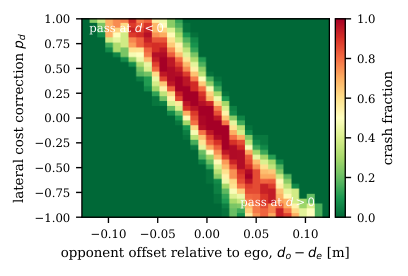
ZipDrift learns a multimodal correction to the cost of fast, myopic short-horizon MPC so that it imitates a long-horizon expert, using a one-step drifting generative model trained only on candidate cost evaluations without differentiating through the optimizer. Generated candidates are ranked by a learned critic while the model-based MPC enforces dynamics and constraints. On a kinematic overtaking benchmark with 53% bimodal contexts, the method is collision-free in all 600 episodes versus 28.5% crashes for manual short-horizon MPC.
中文摘要: 短时域MPC计算快但短视。本文观察到对短时域代价的最优修正往往具有多模态性(如超车时可从左右两侧通过),确定性回归会平均掉这些模式。作者提出ZipDrift,用一步漂移生成模型对MPC代价修正进行建模,并朝低闭环代价方向倾斜,仅利用候选修正的代价评估进行训练,无需对优化器求导。生成若干候选后由学习到的critic排序,再由基于模型的MPC保证动力学与约束。在由ZipMPC衍生的运动学超车基准中,53%的上下文为双模态,手工短时域MPC在28.5%的测试回合中碰撞,而ZipDrift在全部600个回合中无碰撞,并达到最佳候选的水平;理想化的ZipMPC式回归器仍有4.0%碰撞率。
💬 A clever way to inject long-horizon, multimodal foresight into cheap short-horizon MPC without touching the dynamics model.
💬 该工作巧妙地为廉价的短时域MPC注入长时域、多模态的前瞻能力,而无需改动动力学模型。
Why read it / 推荐理由: Directly relevant if you plan to keep real-time short-horizon MPC on a legged robot but want learned long-horizon cost shaping. 若你希望在足式机器人上保留实时短时域MPC,同时引入学习到的长时域代价塑形,本文直接相关。
3. Social Humanoid: Socially Responsive Human-Humanoid Interaction
社交人形:面向人-人形交互的社交响应式全身运动生成
Authors / 作者: Vongani H. Maluleke, James Ni, Kie Horiuchi, Lea Wilken, Jiahui Lei, Evonne Ng et al.
arXiv: 2611.08407 · PDF
Social Humanoid is a hierarchical system for a 29-DoF Unitree G1 that conditions on a human partner’s motion: a high-level policy tokenizes and forecasts human and humanoid motion to generate reactive whole-body trajectories, while a low-level whole-body tracking controller executes them on hardware. A two-phase adaptive retargeting procedure morphs the human partner to preserve contact and reachability, yielding a 260-hour Human-Humanoid Interaction benchmark built from five mocap datasets, with coordinated behavior validated in simulation and on the real robot.
中文摘要: 人形机器人通常作为孤立智能体训练,难以与会主动预判和调整的人类伙伴进行物理协同。本文提出Social Humanoid,一种分层系统:高层策略通过共享的token化表示对人与机器人的运动序列建模,在伙伴被遮挡时仍能预测其运动并生成响应式全身动作;底层全身跟踪控制器在29自由度Unitree G1上执行这些动作。为构建训练数据,作者提出两阶段自适应重定向方法,将交互中的一方重定向到机器人,同时对另一方做形变以保持接触动力学、可达性与相对体型尺度,并在五个动作捕捉数据集上构建了260小时的人-人形交互基准。结果表明系统在仿真与真实世界中均能产生协调、与人类对齐的行为。
💬 A strong whole-body tracking plus motion-forecasting pipeline that is directly transferable to legged loco-manipulation and human-robot co-locomotion.
💬 该工作将全身跟踪与运动预测结合,可直接迁移到足式移动操作与人机协同行走。
Why read it / 推荐理由: Read it for the adaptive retargeting recipe and the whole-body tracker, both reusable for modular legged platforms interacting with humans. 值得阅读其自适应重定向方法以及全身跟踪器,两者都可复用于与人交互的模块化足式平台。
4. Perceptive Humanoid Motion from Simulation
从仿真中获得感知式人形运动
Authors / 作者: Siyuan Hu, Abulikemu Abuduweili, Yue Meng, Shipeng Liu, Quentin Leboutet, Chen Chen et al.
arXiv: 2611.06908 · PDF
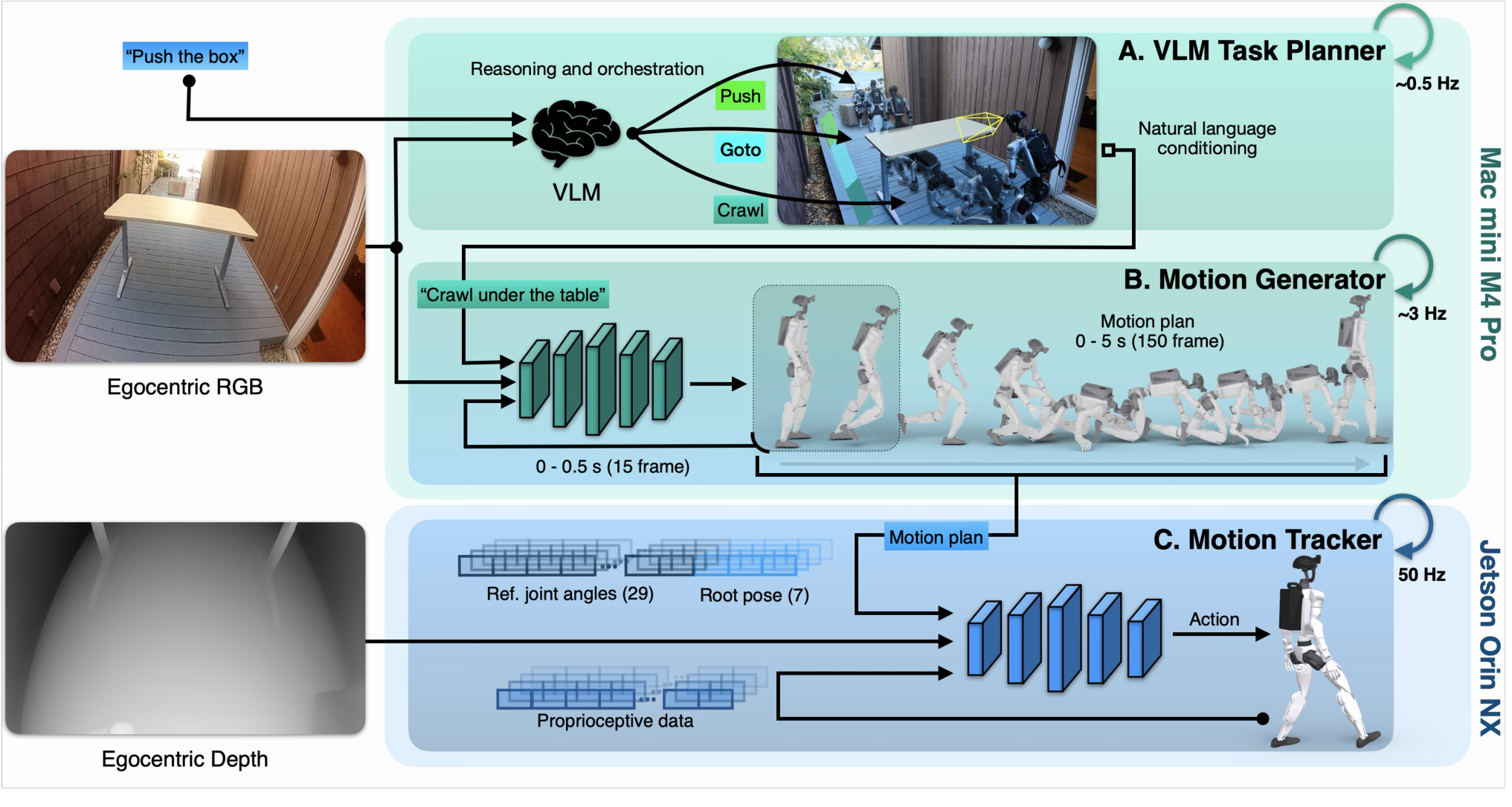
HALO is a humanoid autonomy system trained on vision-language-motion data synthesized across a thousand procedurally generated homes, scaling data with compute instead of human teleoperation. It learns skills such as sitting on chairs, navigating to named objects, sidestepping through half-open doors, crouching and crawling under tables, and pushing boxes, then composes them for long-horizon tasks. Without seeing any real home, it transfers zero-shot to six unmapped real environments with a 91% success rate over 360 trials.
中文摘要: 人形机器人通用自主性的瓶颈在于数据:将像素与自由语言映射到关节指令需要配对监督,而此类数据规模不足,遥操作与穿戴设备采集又需等量人力。本文提出HALO系统及其数据流水线,在约一千个程序化生成的室内场景中合成视觉-语言-运动数据,数据规模随算力而非人力扩展。HALO由此习得坐椅子、导航到指定物体、侧身穿半开门、蹲伏爬行钻桌、推箱子等技能,并可编排这些技能求解长时域复合任务。训练中从未见过真实家庭环境,却在六个未建图的真实场景、360次试验中实现零样本迁移,成功率达91%。
💬 An impressive demonstration that large-scale procedural simulation plus skill composition can close the sim-to-real gap for perceptive whole-body locomotion.
💬 该工作有力证明:大规模程序化仿真加上技能组合,能够弥合感知式全身运动的仿真到现实差距。
Why read it / 推荐理由: Valuable for the sim-to-real pipeline design and for its benchmark of perceptive locomotion primitives like crouching and crawling under obstacles. 其仿真到现实流程设计,以及对蹲伏、钻桌等感知式运动原语的基准,都很有参考价值。
5. TactileLab: Sim-to-Real Dexterous Robot Manipulation with Efficient Shear-Sensitive Tactile Simulation
TactileLab:面向灵巧操作的高效剪切敏感触觉仿真与仿真到现实迁移
Authors / 作者: Yijiong Lin, Wenhao He, Toby Jack, Max Yang, Haoran Li, Nathan F. Lepora
arXiv: 2611.07881 · PDF
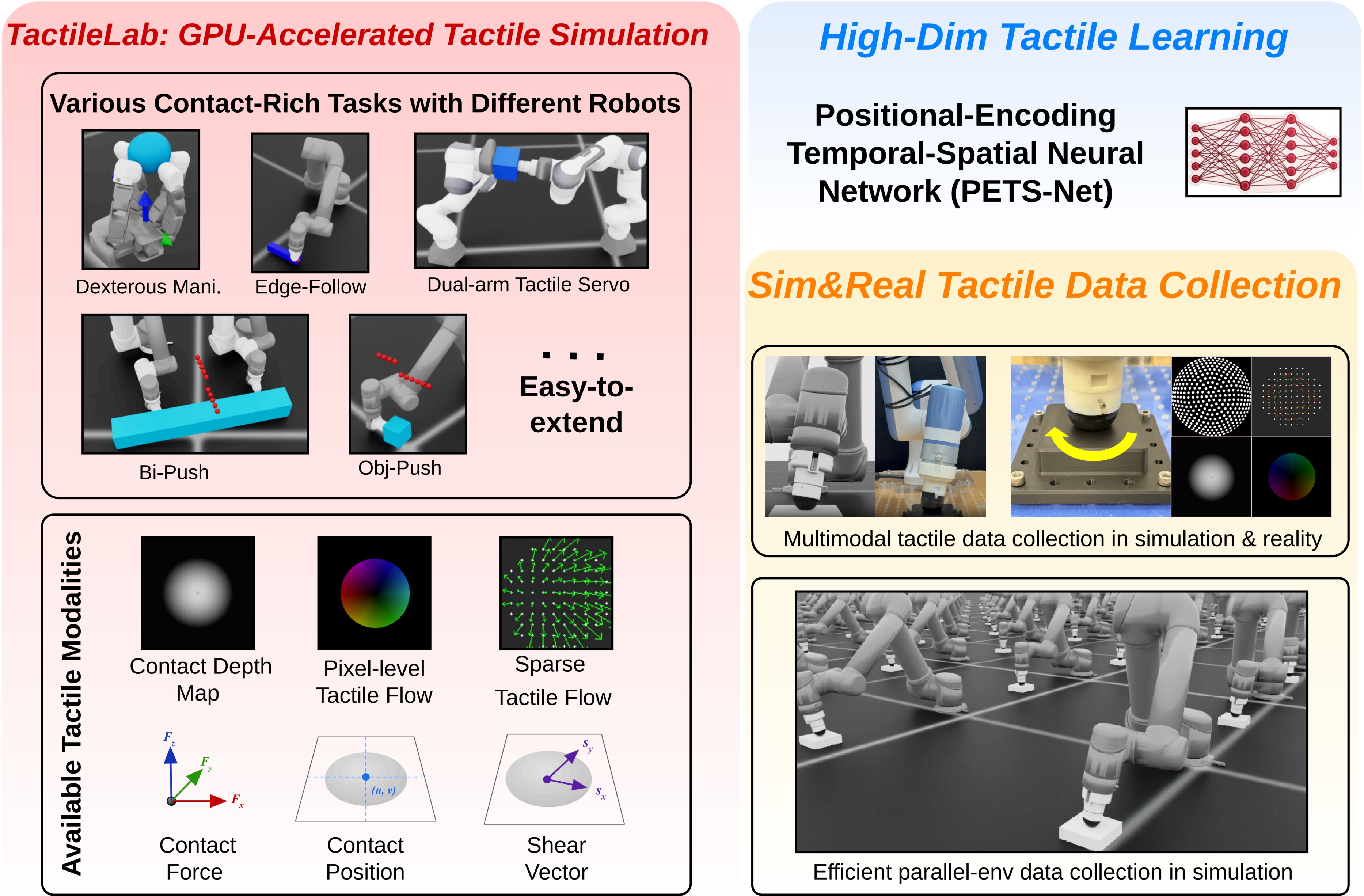
TactileLab is a scalable multimodal tactile simulator on IsaacLab that avoids soft-body physics, instead estimating dense tangential contact motion with rigid-body simulation to produce a simulated tactile flow field that encodes shear, complementing a contact depth field. A policy architecture jointly processes long-horizon proprioception and rich tactile observations, and a real-to-sim tactile translation maps real tactile images to simulated flow and depth for deployment. Policies trained at scale show emergent contact-aware behaviors and transfer to real contact-rich tasks.
中文摘要: 现有仿真器以高保真形变或软体物理模拟接触剪切,计算代价高,难以支撑大规模强化学习。本文提出TactileLab,一个基于IsaacLab的可扩展多模态触觉仿真框架,其核心是基于光流的触觉表示——仿真触觉流:用刚体仿真高效估计接触界面处的稠密切向运动,生成编码剪切相关接触动力学的触觉流场,并与接触深度场的几何特征互补。作者还提出联合处理长时域本体感知与丰富触觉观测的策略架构,以及将真实触觉图像流映射为仿真触觉流与深度场的真实到仿真触觉转换方法,配合新的触觉数据采集流程,实现仿真到现实的策略部署。在多个接触密集任务上,策略可规模化高效学习并涌现接触感知行为。
💬 Shear-aware tactile simulation via rigid-body flow is a practical and scalable route to sim-to-real contact-rich control.
💬 用刚体流实现剪切感知的触觉仿真,是通往仿真到现实接触密集控制的实用且可扩展路径。
Why read it / 推荐理由: Useful if you plan to add foot or leg contact sensing for terrain-aware locomotion, since the flow representation generalizes beyond hands. 若你计划为地形感知运动加入足部或腿部接触感知,本文很有用,因为流表示并不局限于手部。