Robotics Digest
Robotics Paper Digest — 2026-09-12
🤖 Scanned 96 new arXiv papers (cs.RO / eess.SY / cs.LG, last 48 h), picked 5 for modular & legged robotics — summarized by DeepSeek.
🤖 扫描了近 48 小时 arXiv(cs.RO / eess.SY / cs.LG)的 96 篇新论文,围绕模块化与足式机器人精选 5 篇 — 由 DeepSeek 生成双语摘要。
1. Modular Kinematic Reduction of Closed-Chain Mechanisms Using Path Assembly and Defect Homotopy
基于路径装配与缺陷同伦的闭链机构模块化运动学约简
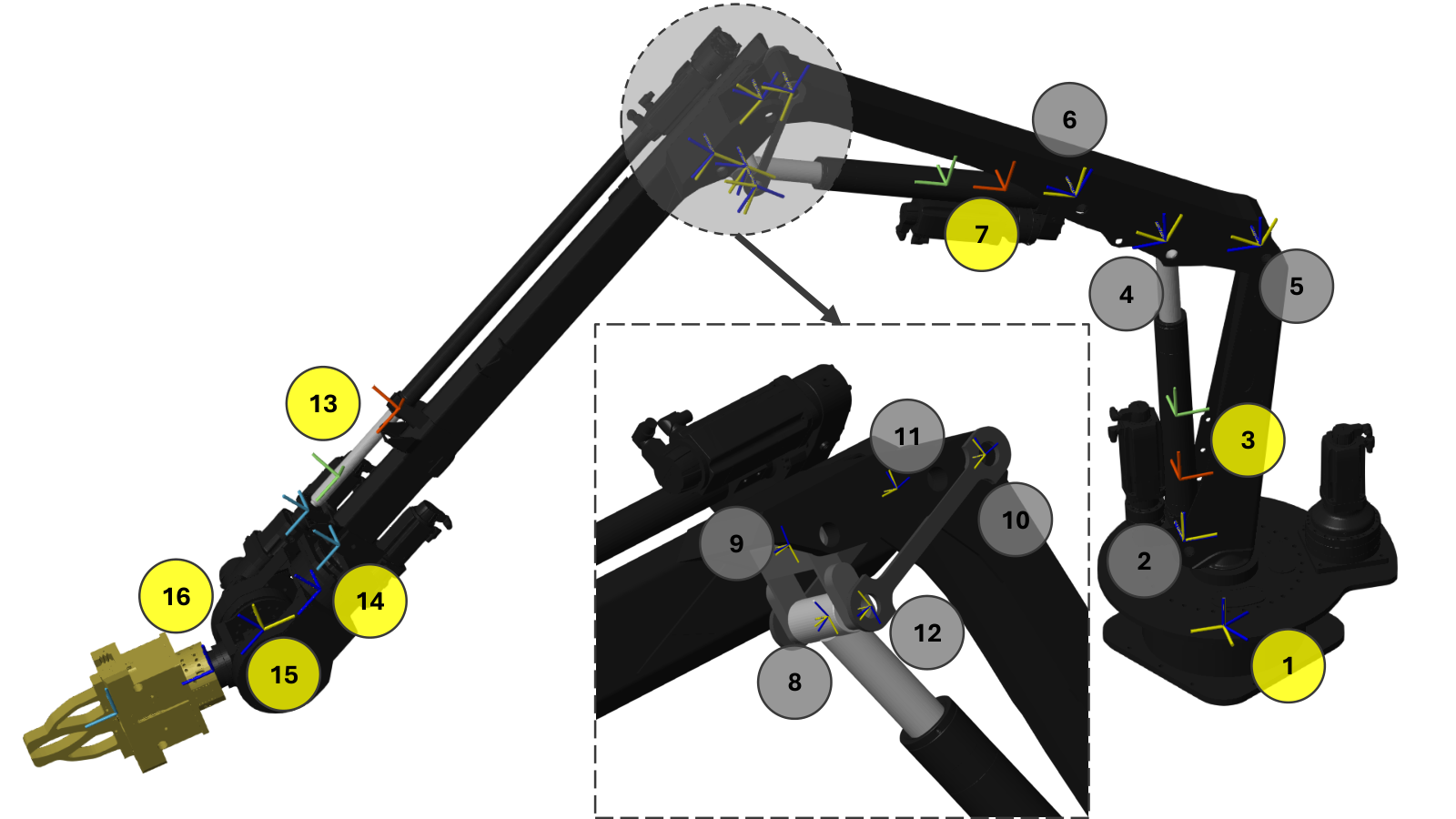
Authors / 作者: Mohammad Dastranj, Jouni Mattila
arXiv: 2609.11338 · PDF
The paper introduces Path-Assembled Closure Differential Mapping (PACDM), a modular framework for resolving closed-chain kinematics by comparing ordered transformation paths and expressing their mismatch via the SE(3) logarithm and Jacobian. It selects independent scalar constraints through rank-revealing analysis and uses defect homotopy plus predictor-corrector continuation to efficiently recover passive coordinates. On a 7-DOF heavy-duty manipulator with two-path and three-path closed-chain modules, it achieves trajectory RMSE below 8.5e-10 rad against Simscape and is approximately 45.8 times faster than applying defect homotopy at every sample.
中文摘要: 该文提出路径装配闭链微分映射(PACDM)框架,用于模块化闭链机构运动学约简。每个闭链单元比较两条有序变换路径,以 SE(3) 对数映射表达路径失配并组装雅可比;多路径模块由最小成对闭链单元构建,通过秩揭示分析选取局部独立标量约束。缺陷同伦沿可行正则连续路径恢复满足闭链约束的被动坐标;在正则位形下隐式微分给出主动-被动局部映射,并用于预测-校正连续运动求解。在含双路径和三路径闭链模块的七自由度重型机械臂上验证,轨迹均方根误差低于 8.5e-10 rad,比逐样本缺陷同伦快约 45.8 倍。
💬 Directly relevant to modular closed-chain leg mechanisms, though validated on a manipulator rather than a legged platform.
💬 该工作对模块化闭链腿机构建模有直接参考价值,但验证对象是机械臂而非足式平台。
Why read it / 推荐理由: It offers a rigorous modular kinematic reduction method for closed-chain mechanisms that could be adapted to reconfigurable legged robot legs. 它提供了一种可用于可重构足式机器人腿部的严格模块化闭链运动学约简方法。
2. Contact-Aware Incremental Model Predictive Control for an Underactuated Aerial Manipulator
面向欠驱动空中机械臂的接触感知增量模型预测控制
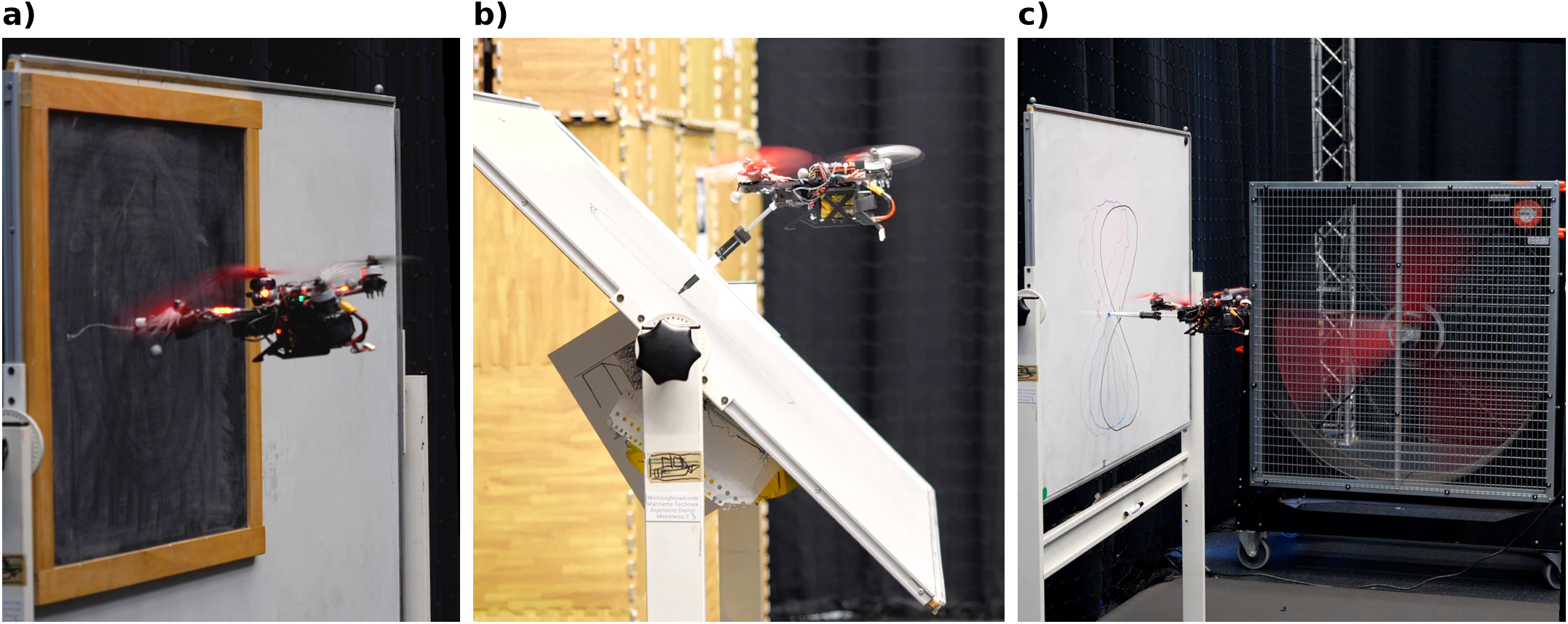
Authors / 作者: Darwin Liu, Tamas Keviczky, Sihao Sun
arXiv: 2609.11661 · PDF
The paper presents a contact-aware control framework for an underactuated aerial manipulator performing writing on surfaces, combining nonlinear MPC for end-effector pose and normal-force tracking with whole-body incremental nonlinear dynamic inversion for disturbance robustness during contact. Real-world experiments on a quadrotor with a single-link arm demonstrate simultaneous five-DoF end-effector pose and contact-force tracking across vertical/inclined surfaces, varying forces, friction, and wind, without dedicated force/torque sensing.
中文摘要: 该文提出一种用于欠驱动空中机械臂接触作业(空中书写)的鲁棒接触感知控制框架。该框架结合非线性模型预测控制(NMPC)实现小参考侵入深度下的末端位置与法向力跟踪,并采用全身增量非线性动态逆(INDI)提升接触过程中对摩擦和气动扰动的鲁棒性。在四旋翼搭载刚性单连杆一自由度机械臂的平台上进行仿真与真实实验,覆盖垂直/倾斜表面、多参考力、不同摩擦和风扰。结果表明,无需全驱动平台、复杂机械臂或专用力/力矩传感器,即可在标准欠驱动四旋翼上实现末端五自由度位姿与接触力的同步鲁棒跟踪。
💬 A strong example of combining NMPC with whole-body incremental control for real-robot contact tasks, though on an aerial rather than legged platform.
💬 将 NMPC 与全身增量控制结合用于真实机器人接触任务的优秀范例,但平台为空中而非足式。
Why read it / 推荐理由: Its contact-aware NMPC and whole-body INDI framework is directly transferable to legged robot force-controlled contact tasks. 其接触感知 NMPC 与全身 INDI 框架可直接迁移至足式机器人力控接触任务。
3. Learning Agent-based Model Predictive Control for Holistic Vehicle Performance
面向整体车辆性能的学习型智能体模型预测控制
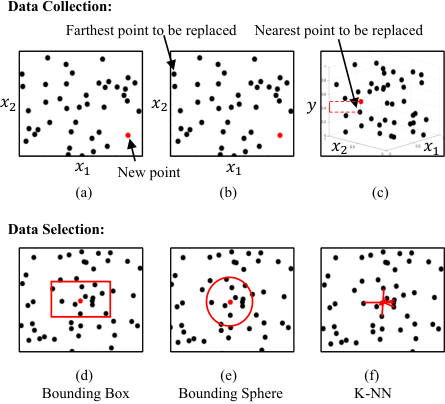
Authors / 作者: Jiaming Zhong, Reza Valiollahi Mehrizi, Mohammad Pirani, Chao Yu, Alireza Kasaiezadeh, Yash Vardhan Pant et al.
arXiv: 2609.11871 · PDF
This paper proposes Learning Agent-based Model Predictive Control (LAMPC), a hybrid of distributed agent-based MPC and Gaussian process regression to learn unknown agent contributions in multi-agent vehicle control. It uses multi-step GPR prediction along the horizon and soft chance constraints based on prediction variance to ensure safety. Simulations and experiments show improved tracking over traditional AMPC while always satisfying constraints, even in less-learned scenarios.
中文摘要: 该文提出学习型智能体模型预测控制(LAMPC),将基于模型的分布式智能体 MPC 与数据驱动学习结合,以提升多智能体车辆整体性能。采用高斯过程回归(GPR)并引入在线数据管理策略预测未知智能体贡献;设计多步预测机制在预测时域内利用 GPR 学习能力,以预测均值补全 MPC 系统模型,并基于预测方差构建软机会约束随机框架以保证控制安全与可行性。仿真与实验表明,LAMPC 在已学习场景中跟踪性能优于传统 AMPC,在欠学习场景中仍能保证约束满足。
💬 A methodologically solid MPC-plus-learning scheme, though its application is vehicle multi-agent control rather than legged locomotion.
💬 方法上扎实的 MPC 与学习结合方案,但应用场景是多智能体车辆控制而非足式运动。
Why read it / 推荐理由: The GPR-enhanced multi-step MPC and chance-constraint design offer transferable ideas for learning-based MPC on modular legged robots. 其 GPR 增强多步 MPC 与机会约束设计可为模块化足式机器人的学习型 MPC 提供可迁移思路。
4. Distributed Optimization of Modular Production Systems using Model-based Reinforcement Learning with Inverse Models
基于逆模型与模型强化学习的模块化生产系统分布式优化
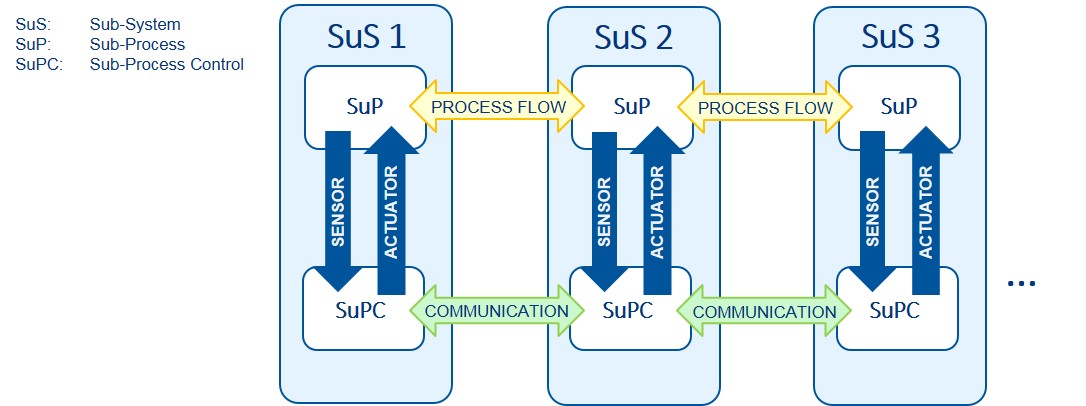
Authors / 作者: Andreas Schwung, Steve Yuwono, Sofiene Lassoued, Dorothea Schwung
arXiv: 2609.11615 · PDF
This paper proposes a model-based reinforcement learning framework for distributed optimization of modular production systems by incorporating approximate inverse process models into policy training. The inverse models disentangle actuation dynamics from state-space dynamics, allowing RL training solely in task space with a lightweight feedforward architecture integrated into standard policy networks. Experiments on a heterogeneous modular production testbed show improved performance and training speed, especially for off-policy algorithms.
中文摘要: 该文提出一种面向高柔性模块化制造系统的数据驱动自学习控制方法,在基于模型的强化学习框架中引入近似逆过程模型以训练强化策略。该方法将执行器动力学与状态空间动力学的学习解耦,使强化学习能够在任务空间内进行;同时设计轻量级前馈近似逆模型并集成到标准强化学习算法的策略网络中。作者在包含异构生产模块的实验室模块化生产测试平台上验证,结果表明该方法在模块化制造单元的性能和训练速度上均有提升,对离策略算法尤为明显。
💬 The inverse-model-based MBRL idea could inform modular robot control, but the manufacturing domain limits direct legged applicability.
💬 基于逆模型的 MBRL 思路可为模块化机器人控制提供参考,但制造领域限制了其对足式机器人的直接适用性。
Why read it / 推荐理由: It offers a modular RL architecture with inverse dynamics that may inspire distributed control of reconfigurable legged modules. 其带逆动力学的模块化 RL 架构可能启发可重构足式模块的分布式控制。
5. Safety-aware Skill Adaptation for Reinforcement Learning in Dynamic Environments
动态环境中面向强化学习的安全感知技能自适应
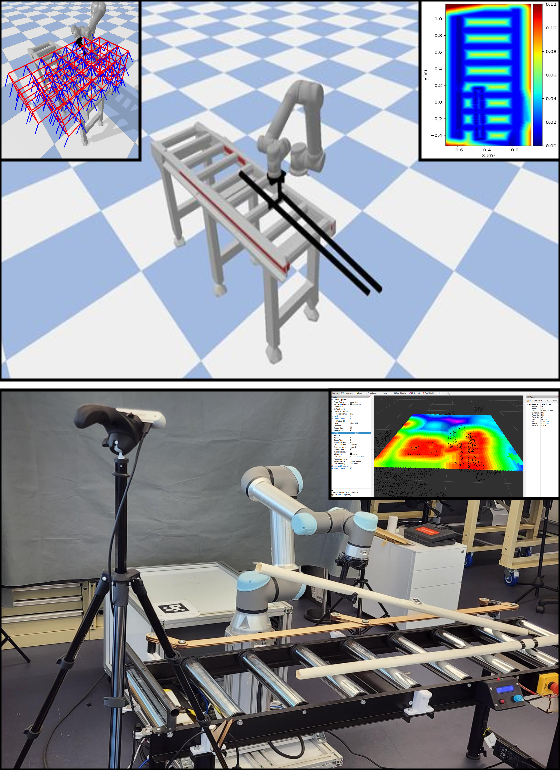
Authors / 作者: A K M Nadimul Haque, Sheila Sutjipto, Marc G. Carmichael, Teresa Vidal-Calleja
arXiv: 2609.11433 · PDF
The paper presents Dist-GPRL, a distance-aware and safety-guided reinforcement learning framework that adapts structured robot skills by sequentially updating overlapping windows of sparse trajectory via-points under a Gaussian process parameterization. Safety is enforced through a Hausdorff-approximation-planner-derived safe-subspace prior and dynamically updated distance-field clearance/gradient rewards, while a trajectory-kinematics similarity regularizer preserves demonstrated motion characteristics. The approach targets stable skill adaptation in cluttered and dynamic environments.
中文摘要: 该文提出 Dist-GPRL,一种距离感知且安全引导的强化学习框架,用于结构化机器人技能自适应。方法基于高斯过程技能参数化,按顺序自适应更新稀疏轨迹通过点的重叠局部窗口,而非在每个策略步修改完整技能;策略原始输出通过 GP 协方差关联,产生时间一致的轨迹更新,降低全局轨迹自适应的动作空间与信用分配难度。安全引导包含两部分:由 Hausdorff 近似规划器(HAP)导出的安全子空间先验,将探索偏向可行区域;动态更新的距离场间隙与梯度奖励提供局部障碍感知。轨迹-运动学相似正则项保持示教速度剖面,旨在动态杂乱环境中实现稳定技能自适应。
💬 Relevant to safe RL-based motion adaptation in cluttered environments, though validation is not on legged platforms.
💬 与杂乱环境中安全 RL 运动自适应相关,但未在足式平台上验证。
Why read it / 推荐理由: Its GP-based skill adaptation and obstacle-aware safety mechanism are promising for legged locomotion in dynamic cluttered spaces. 其基于 GP 的技能自适应与障碍感知安全机制对动态杂乱环境中的足式运动有前景。